
FMCG
Rooftop solar for FMCG factories and their warehouses
An FMCG group has plants and warehouses in several states, each with its own roof, tariff and state rules. We study every site on its own bill, then build and run the plants on one monitoring platform.
FMCG sites we have built, and where
- Clients
- Hindustan Unilever
- Dabur
- Britannia Industries
- Marico
- Exotic Fruits
- States
- Tamil Nadu · Uttarakhand · Maharashtra · Punjab · Dadra and Nagar Haveli and Daman and Diu · Assam · Bihar · Madhya Pradesh · Rajasthan · Gujarat · Himachal Pradesh · Uttar Pradesh
- Installation types
- Metal sheet roof · RCC · Ground mount
- Most recent commissioning
- Aug 2026
Shifts and seasons
Two or three shifts, with peaks before summer and the festive months
An FMCG plant is a set of mid-sized loads that run together: mixing and processing, filling and packing, conveyors, compressed air, and the chillers and air handling that hold hygiene areas within limits. No single machine dominates the bill.
Most plants work two or three shifts through the week, and demand moves with the calendar. Beverage, ice-cream and confectionery lines build up before summer and the festive months, while staples run closer to flat. Twelve months of bills show how far your plant swings.
Process heat is a separate cost. Ovens, boilers and fryers usually run on gas, steam or thermal oil, so a rooftop plant offsets the electrical side only: motors, cooling, packing and lighting.
Cooling and hygiene air
Cold rooms, process chillers and air handling for hygiene zones draw most in the afternoon heat, when solar output is also at its highest.
Filling and packing
Filling, sealing and wrapping machines run every production hour, so their load follows the shift roster.
Compressed air
Compressors feed pneumatic packing equipment and seldom switch off while a line is running.
Warehouses on the campus
Finished-goods and raw-material stores add roof area but little load. Their roofs can feed the factory when both sit behind one meter.
One plant, row by row
What a plant head can expect on an FMCG site
| Operating pattern | Two or three shifts, six or seven days, with extra shifts and weekend runs ahead of summer and festivals. |
|---|---|
| Roofs we meet | Long metal sheet production halls, RCC blocks for utilities and offices, and warehouse roofs that are sometimes too light for panels. |
| Load shape | A broad daytime plateau over a steady night base from chillers and cold rooms. Most plants export little or nothing. |
| What limits the design | Hygiene and audit rules for contractors, leak risk above open product areas, and the strength of warehouse roofs. |
| Realistic solar role | A part of the daytime electrical load at each plant. Heat from gas, steam or oil stays as it is. |
Roof and campus
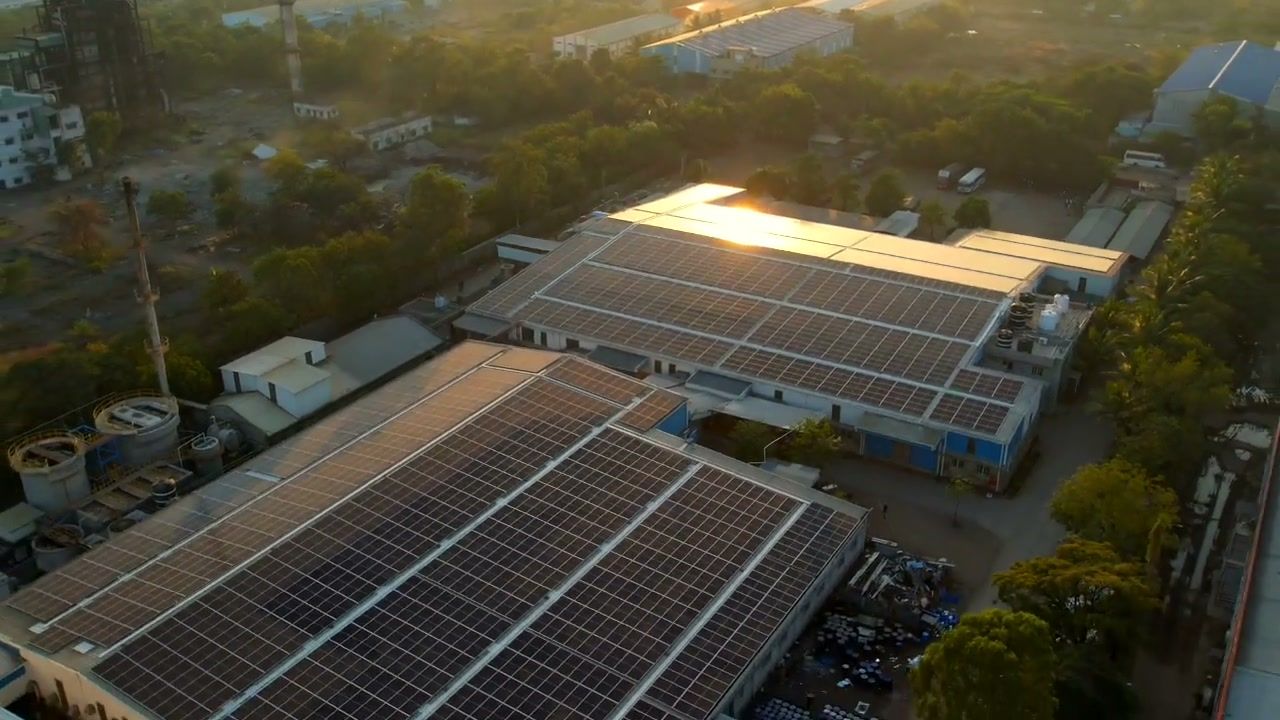
Sheet roofs, RCC blocks and spare land on the same campus
Production halls are mostly long sheet roofs, utility and office blocks are RCC, and a campus often has open land. We design across all three and connect the plant behind your meter, so its units replace power you would otherwise buy from the grid.
- Mounting designed to comply with OEM installation guidelines and protect applicable warranties, with non-penetrating options for a zero-leakage roof
- Ballasted structures on RCC blocks, with the waterproofing left untouched
- Ground-mount arrays on unused land inside the boundary when roofs run out or cannot take the weight
- Cable routes and inverter rooms placed outside hygiene and food-contact zones, agreed with your quality team
- Roof work planned around your site's permit and contractor rules
On the project list
Four plants from the list, and what each one shows
Roof type and location come from the project list. The notes say only what the list supports.
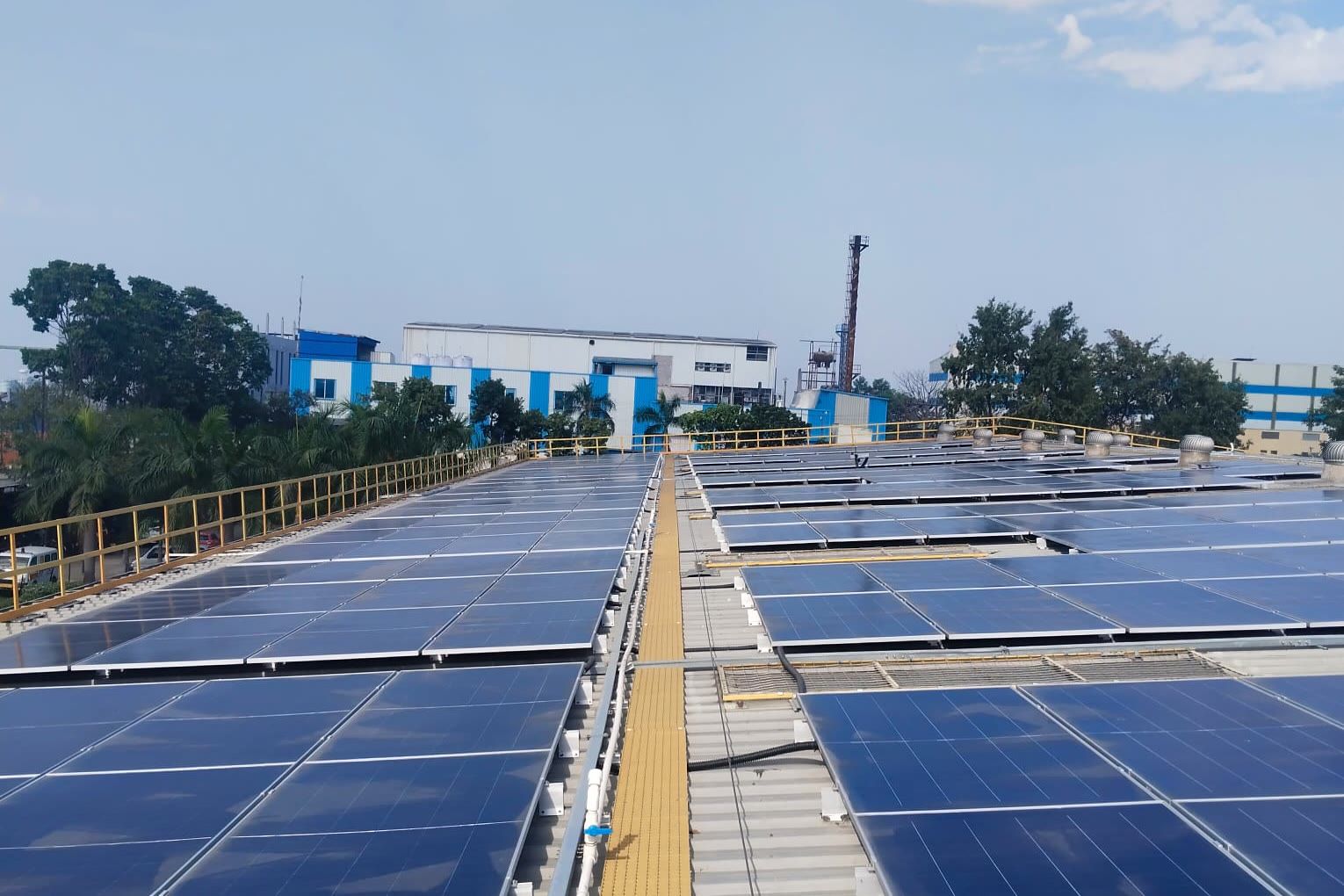
- Britannia – BihtaMetal sheet roof · 1,600 kWp
Metal sheet roof. Britannia appears three times on the list (Bihta, Hajipur and Guwahati), each plant with its own size and design.
Plant page - Dabur – Rudrapur, 1,000 kWpMetal sheet + RCC
Metal sheet and RCC on one plant, the mixed-roof case described in the Dabur case study.
Plant page - HUL – RajpuraMetal sheet roof · 210 kWp
A warehouse plant built as a ground mount, as was the Hindustan Unilever warehouse plant at Haridwar.
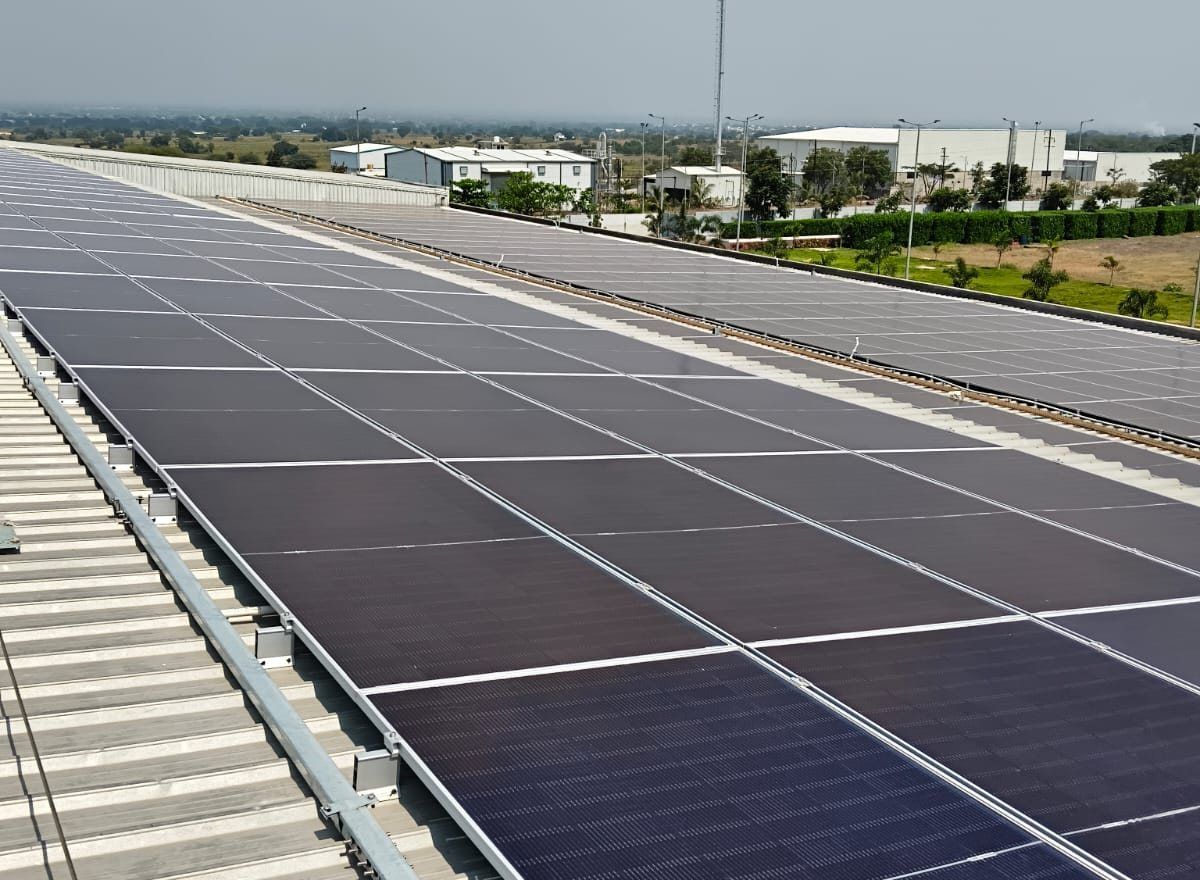
Plant page - Exotic Fruits – NashikMetal sheet roof · 1,332 kWp
Metal sheet roof, with a second Exotic Fruits plant at Krishnagiri in Tamil Nadu.
Plant page
Case studies
Hindustan Unilever at Haridwar, Dabur at Rudrapur
Hindustan Unilever
Haridwar, Uttarakhand
A behind-the-meter ground-mount plant sized to the daytime load, which keeps the economics largely insulated from net-metering policy changes.
Read the case studyDabur India
Pantnagar (SIDCUL Rudrapur), Uttarakhand
A PPA with no capital outlay, covering mixed roofs: adhesive mounting on the metal sheet buildings and ballasted structures on RCC.
Read the case study
Finance
CAPEX at one plant, a PPA at the next, chosen site by site
FMCG groups often add solar plant by plant, and our own clients show both models: Hindustan Unilever owns its plant, and Dabur buys power under a PPA.
CAPEX: you own the plant
Own the plant and keep the savings for its life. Our CAPEX projects return 25%+ IRR. A Pune plant returned 50%+ IRR and paid back in under 2 years. The study's ROI sheet shows the return for your site.
How CAPEX worksPPA / OPEX: you buy the units
Adhvanik owns and runs the plant; you pay an agreed tariff, below your grid rate, per unit generated on 5–25 year PPAs, with PPAs running to 2040 and 2051.
How a PPA worksCommon questions
What FMCG quality and plant teams ask first
Hygiene audits, process heat, seasonal swings and leased buildings come up first.
Speak with an industrial solar engineerWill roof work affect our hygiene audits or food-safety approvals?
Roof work happens outside production and packing halls. Cable routes and inverter locations are agreed with your quality team before the layout is final, and our project and safety engineers make sure everyone on site follows your induction and permit rules. The one interruption inside the plant is the final tie-in to your electrical system, a short planned shutdown scheduled with maintenance.
Does solar replace the gas or steam we use for cooking, baking and sterilising?
No. Solar panels make electricity, so they offset motors, packing, cooling and lighting. Process heat from gas, steam or thermal oil carries on as it is. If heat is the bigger cost at your plant, the study shows how small a share of the energy bill solar can address before you spend more time on it.
Our sales swing with the season. Does that change the plant size?
Yes. We read at least twelve months of bills and size against the quieter months, so the units are used on site all year. A seasonal peak then shows up as extra power bought from the grid, and none of the plant's output is wasted.
We have plants in several states. Can one partner handle all of them?
Yes. We have built FMCG plants in Tamil Nadu, Uttarakhand, Maharashtra, Punjab, Dadra and Nagar Haveli and Daman and Diu, Assam, Bihar, Madhya Pradesh, Rajasthan, Gujarat, Himachal Pradesh and Uttar Pradesh, and run them on one monitoring platform (Asset Connect) with one O&M team. Each site still gets its own design, because metering rules and roofs differ from state to state.
Part of our production is in a leased or third-party building. Can solar go there?
Only with the owner's written consent, and the contract term has to fit the lease. A PPA, where Adhvanik owns the plant, is often the easier fit on a leased building because you commit to buying units and do not own equipment on someone else's roof.
What if a warehouse roof is too weak for panels?
A structural engineer (yours, or one we refer) confirms the roof can take the load before we propose anything. Where it cannot, we look at another building on the campus or at a ground-mount array on spare land inside your boundary, which the Hindustan Unilever warehouse plants on our list use.
Who keeps the plant performing once it is running?
Our own O&M team. Our O&M contracts carry a 95% uptime guarantee and a performance-ratio guarantee, with lost generation credited at ₹3.00/kWh. We respond remotely within 1 working day. If the fault cannot be fixed remotely, an engineer attends site within 2 working days.
Projects
FMCG plants on the list, newest first
Rooftop and ground-mount plants for food, home and personal-care makers. City and state only.
- 1,009 kWp
Exotic Fruits – Krishnagiri
Tamil Nadu
Commissioned Aug 2026
- 332 kWp
HUL – Haridwar, 332 kWp
Uttarakhand
Commissioned Jul 2026
Exotic Fruits – Nashik
Maharashtra
Commissioned Jul 2026
- 210 kWp
HUL – Rajpura
Punjab
Commissioned Jul 2026
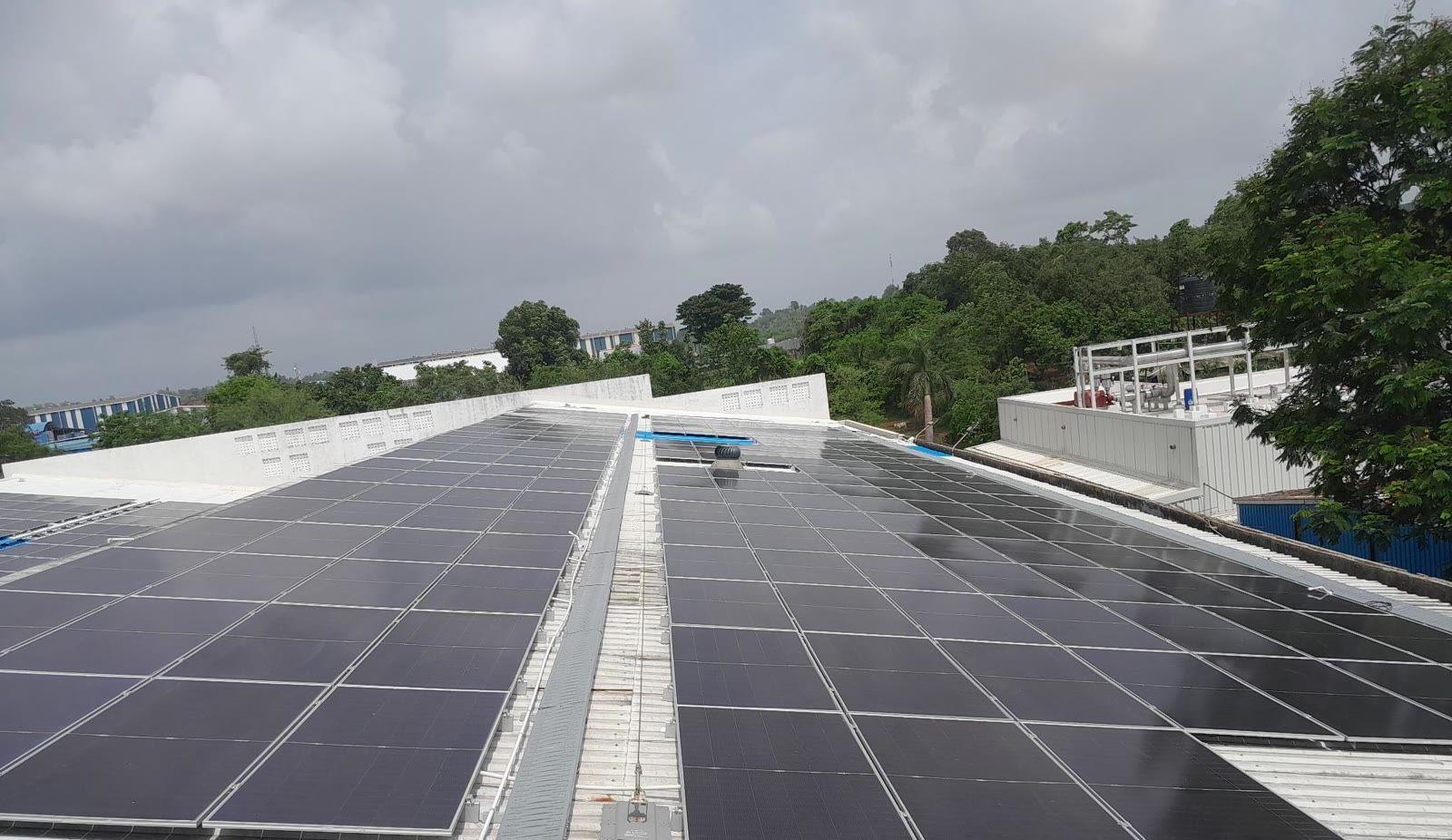
Dabur – Silvassa
Dadra and Nagar Haveli and Daman and Diu
Commissioned Apr 2026
- 1,700 kWp
Britannia – Guwahati
Assam
Commissioned Jan 2026
- 517 kWp
Marico – Jalgaon
Maharashtra
Commissioned Dec 2025
Britannia – Bihta
Bihar
Commissioned Nov 2025
- 1,050 kWp
Britannia – Hajipur
Bihar
Commissioned Oct 2025
Guides and glossary
Guides for FMCG finance and plant teams
- CAPEX or PPA: which solar model fits your factory?Read the guide
- Metal sheet, RCC, ground mount or carport: choosing the installationRead the guide
Terms used on this page
Free feasibility study
Price solar across your FMCG network
Send us one plant or the whole list. An engineer replies within 48 hours. Each feasibility study takes 7 days and is free.
What the study covers
- Financial ROI sheet based on a preliminary design
- Roof feasibility and the area available for installation
- Policy check for your state and connection