
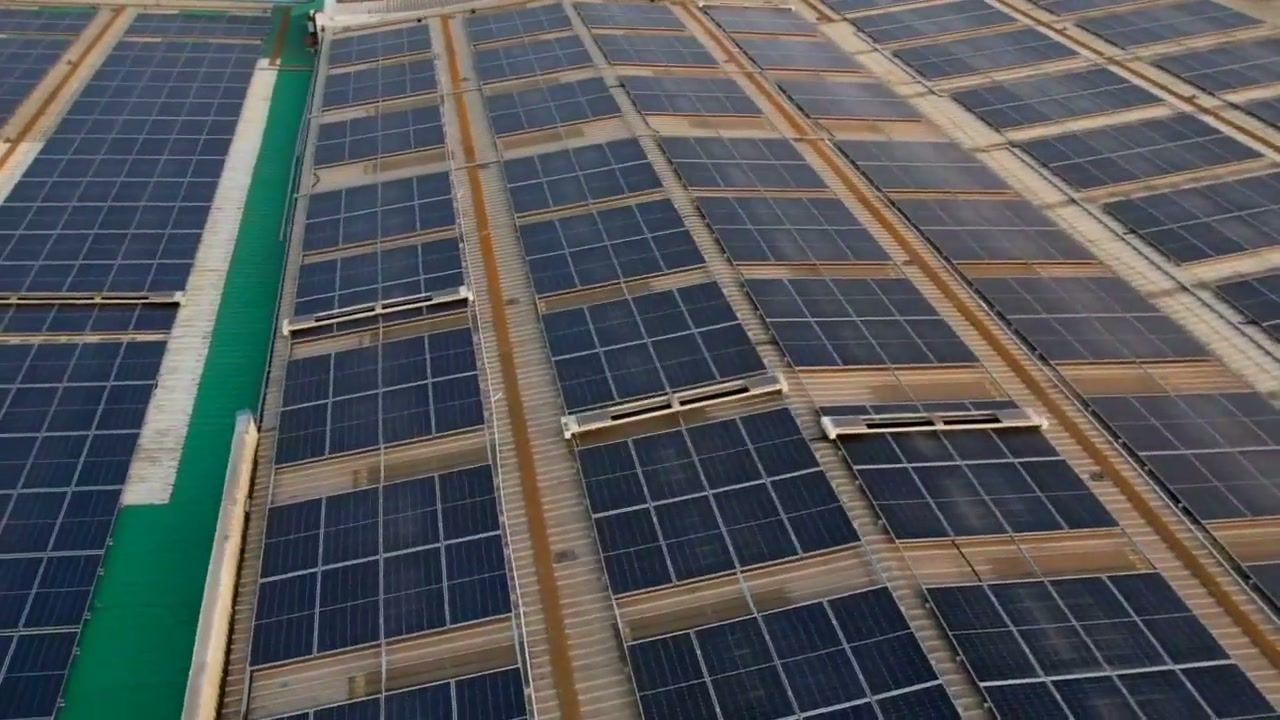
Automotive
Rooftop solar for auto component plants on long sheet roofs
A component plant's bill carries energy charges and, on most tariffs, a maximum-demand charge, and solar reduces one far more than the other. We show both lines in the study, then build on the sheet roof while your lines keep running. Only the final tie-in needs a shutdown.
Auto component clients
- Clients
- Springtech Suspensions
- Sansera Engineering
- Victora Industries
- Simplex Metal Processors
- MTC
- UCC
- Arihant Auto
- States
- Madhya Pradesh · Haryana · Maharashtra · Karnataka
- Installation types
- Metal sheet roof · O&M takeover
- Most recent commissioning
- Feb 2026
Shop-floor loads
Presses, machining and heat treatment, shift by shift
Auto component plants concentrate demand in a few hungry processes: power presses, CNC machining, welding, forging or die-casting furnaces, heat treatment, and paint or powder-coat ovens. Compressed air runs underneath almost all of them.
Suppliers work to the vehicle maker's schedule. That means two or three shifts, extra Sundays when order books are full, and a plant shutdown when the OEM stops for annual maintenance or a model changeover. Outside those weeks the daytime load is high and dependable, and the study checks the shutdown weeks against your monthly bills.
Presses draw in sharp bursts, and many industrial tariffs bill a maximum-demand charge on the highest kVA recorded in any interval of the month. A solar plant reliably cuts the energy charge. It cannot promise to cut maximum demand, because a passing cloud can coincide with a press peak. Your finance team should see both lines before judging the return.
Press shops
Mechanical and hydraulic presses create high, peaky demand during production hours.
CNC and machining
Machining centres, grinders and lathes are a steady base load across every shift.
Heat treatment and paint
Furnaces, curing ovens and paint booths add large thermal and ventilation loads.
Shutdown weeks
An OEM stop or a Diwali break leaves the plant generating into a quiet building, which the sizing has to allow for.
OEM expectations
Vehicle makers increasingly ask suppliers about energy and emissions, and solar generation data helps answer them.
A typical plant
Auto component plant: schedule, roof and demand profile
| Operating pattern | Two or three shifts to the vehicle maker's delivery schedule, with planned shutdown weeks and extra Sundays in busy quarters. |
|---|---|
| Roofs | Long metal sheet roofs on steel frames, of every age. Old sheets come first, and a structural engineer confirms the purlins can take the load. Every auto plant on our list with a recorded roof type is on metal sheet. |
| Load shape | High and stepped by shift, with short sharp peaks from presses and furnace cycles. |
| What limits the design | Sheet and purlin condition, wind load on long spans, oil mist and metal dust on modules, and crane and forklift movement below. |
| Realistic solar role | A cut in the energy charge on weekday daytime units. Relief on the maximum-demand charge is partial and is shown separately. |
Roof engineering
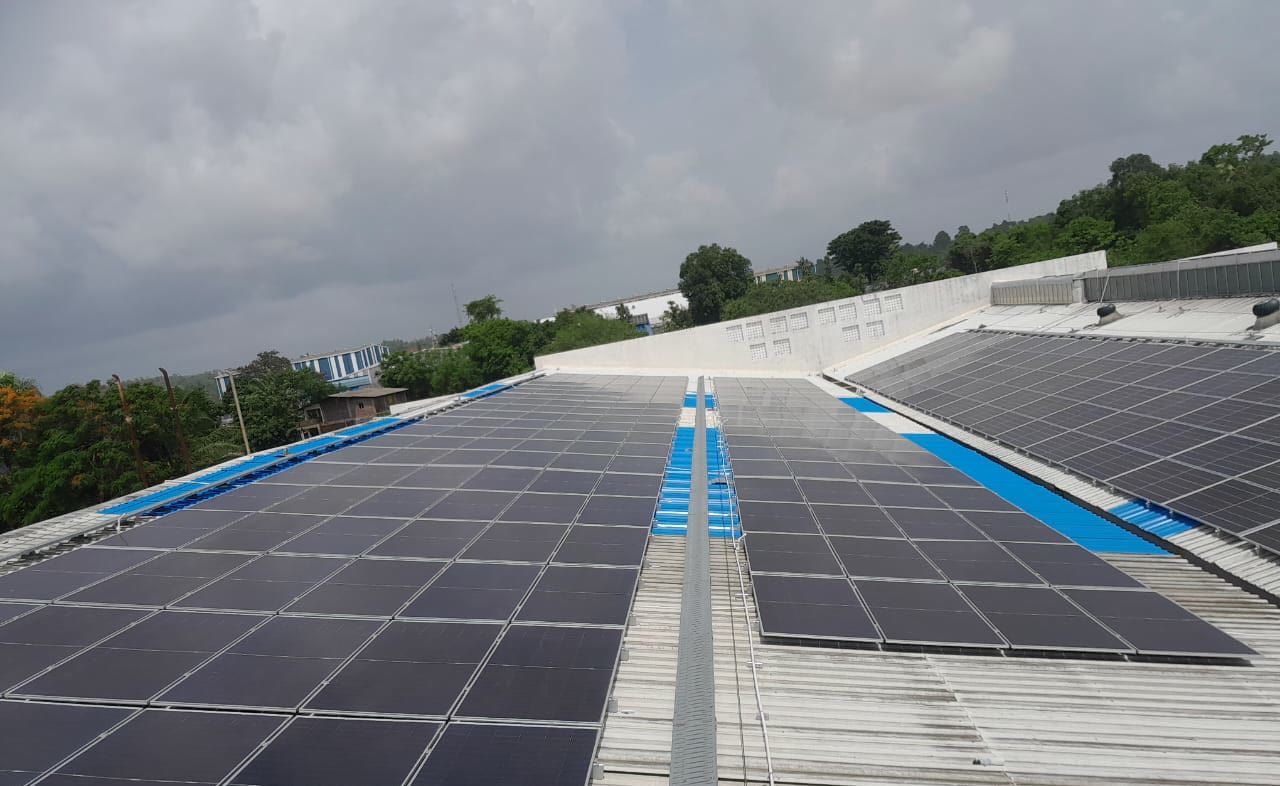
Purlins, sheet condition and wind load on a long span
Most of the plants on our list are built on long metal sheet roofs. The design work covers sheet condition, wind load under IS 875 and safe access for the people who will inspect and maintain the plant.
- Clamp or adhesive mounting that does not penetrate the sheet, protecting its warranty
- Wind-load engineering for each roof and location
- Walkways and safety lines between arrays for cleaning and inspection
- Cleaning planned for oil mist and metal dust, which soil modules faster than ordinary dust
- Construction timed around shifts and crane movement below, with the tie-in on a weekly off or an OEM shutdown
On the project list
Auto plants on the list
The list has plants in the Pune, Pithampur, Aurangabad and Manesar clusters, and one in Karnataka.
- Simplex Metal Processors – Pithampur, 500 kWpMetal sheet roof
Metal sheet roof at Pithampur. Simplex has two plants there, units 1 and 2, on separate projects.
Plant page - UCC – Pune, 166 kWpMetal sheet roof
UCC has a plant and a later extension at Pune, both on metal sheet roofs.
Plant page - MTC – Bidadi, 181 kWpMetal sheet roof
Metal sheet roof in Karnataka, the one auto plant on the list outside the four clusters.
Plant page
Finance
Annual price agreements meet moving grid tariffs
Component prices are fixed in annual negotiations while grid tariffs move. A solar plant turns part of your power bill into a cost you know in advance.
CAPEX: you own the plant
Own the plant and capture the full savings. Our CAPEX projects return 25%+ IRR. A Pune plant returned 50%+ IRR and paid back in under 2 years. The study shows the projection for your tariff.
How CAPEX worksPPA / OPEX: you buy the units
No capital tied up away from tooling and capacity. We build, own and maintain the plant; you pay a fixed rate, below the grid tariff, per unit generated.
How a PPA worksCommon questions
Maximum demand, old sheets and line stoppages
What plant heads in the auto supply chain ask first.
Speak with an industrial solar engineerWill solar reduce our maximum-demand charge?
Only in part. Solar cuts the units you buy, which lowers the energy charge. Maximum demand is set by the single highest demand interval in the month, and that interval can fall on a cloudy spell. The study splits your bill into its energy and demand lines and shows the saving on each, so the return is not overstated.
Can installation happen without stopping our lines?
For almost all of the build, yes. Roof work goes on above a running plant, with access routes and lifting planned around your shop floor. Tying the plant into your electrical system needs a brief shutdown, which can be timed to a weekly off or an OEM stop.
Our roof sheets are old. Can they carry panels?
We look at sheet condition in the feasibility study, and a structural engineer (yours, or one we refer) confirms the roof structure can take the load. If the sheets or purlins need attention, we show the options, including using other buildings or land within the boundary.
Does oil mist from machining affect the modules?
Oil mist and metal dust stick to modules and cut output faster than ordinary dust. Exhaust points are mapped before design, and monitoring shows soiling losses so cleaning follows the measured drop.
We supply several OEMs from plants in different states. Can you cover all of them?
Our automotive projects already span Madhya Pradesh, Haryana, Maharashtra and Karnataka. We study each plant against its own state rules and run all of them on one monitoring platform.
What does the feasibility study include?
It takes 7 days, is free and carries no commitment. You receive: financial ROI sheet based on a preliminary design; policy check for your state and connection; roof feasibility and the area available for installation; budgetary quote.
What happens if generation is lower than promised?
Our O&M contracts carry a 95% uptime guarantee and a performance-ratio guarantee, with lost generation credited at ₹3.00/kWh. Asset Connect tracks generation continuously, and you get a monthly engineer-signed report.
Projects
Auto component plants by commissioning date
Rooftop plants in established auto clusters. City and state shown; newest first.
- 400 kWp
Springtech Suspensions – Pithampur
Madhya Pradesh
Commissioned Feb 2026
- 201 kWp
Sansera Engineering – Manesar
Haryana
Commissioned Sep 2025
- 843 kWp
Victora Industries – Pune
Maharashtra
Commissioned Jul 2025
- 500 kWp
Simplex Metal Processors – Pithampur, 500 kWp
Madhya Pradesh
Commissioned Apr 2025
- 350 kWp
Simplex Metal Processors – Pithampur, 350 kWp
Madhya Pradesh
Commissioned Dec 2024
- 181 kWp
MTC – Bidadi, 181 kWp
Karnataka
Commissioned Apr 2024
- 166 kWp
UCC – Pune, 166 kWp
Maharashtra
Commissioned Nov 2023
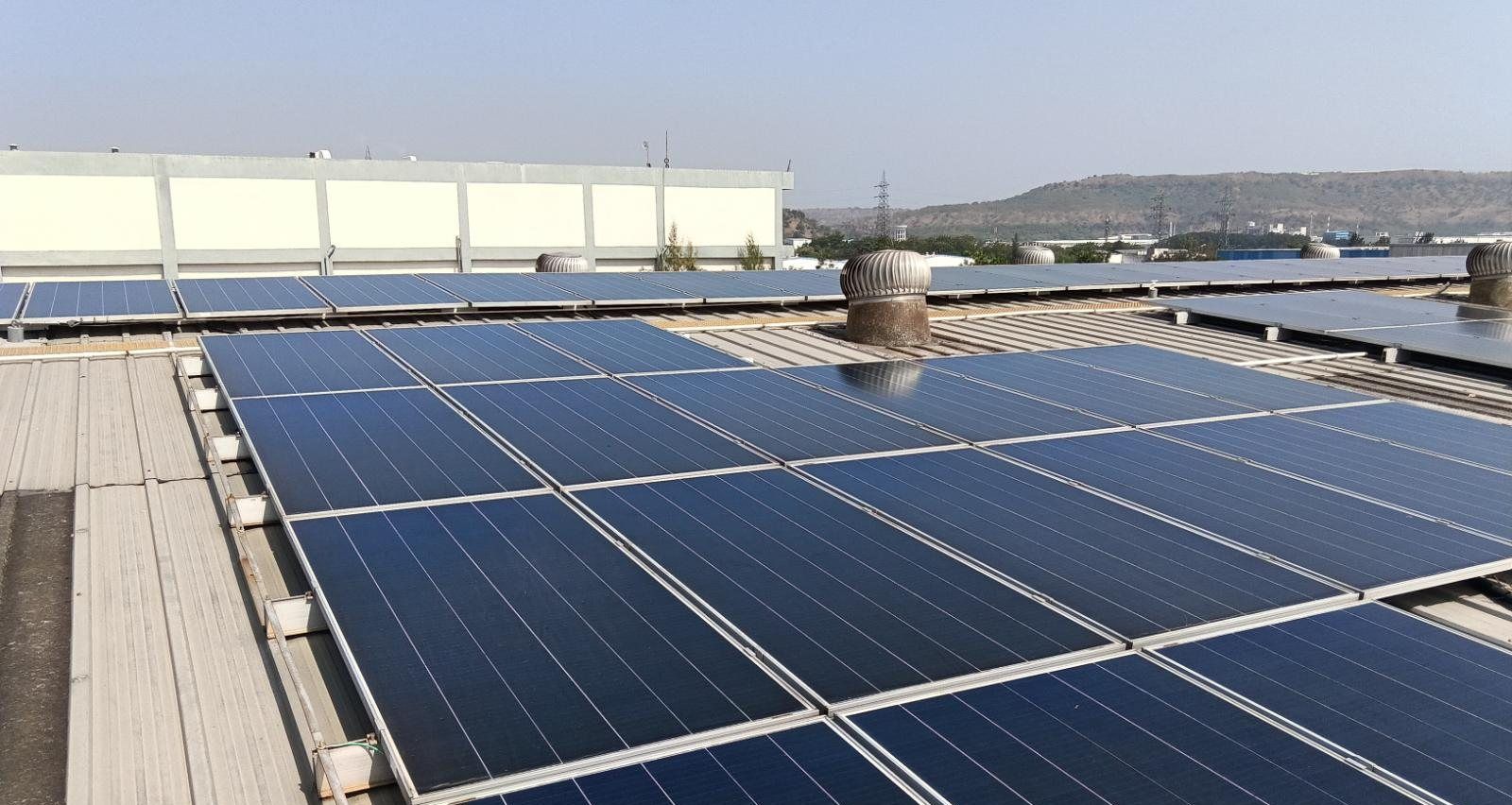
Arihant Auto – Aurangabad
Maharashtra
Commissioned May 2022
- 310 kWp
UCC – Pune, 310 kWp
Maharashtra
Commissioned Jun 2021
Guides and glossary
Guides on demand charges and tariffs
- Reading your electricity bill: the numbers that matter for solarRead the guide
- CAPEX or PPA: which solar model fits your factory?Read the guide
Terms used on this page
Free feasibility study
Start with a location and a recent bill
Send both. We get back within 48 hours. The study takes 7 days.
What the study covers
- Roof feasibility and the area available for installation
- Financial ROI sheet based on a preliminary design
- Policy check for your state and connection