
Electrical & electronics
Rooftop and carport solar for electrical and electronics plants
Assembly and test floors work a general shift or two, so the weekly off matters as much as the daily curve. We size rooftop and carport plants against that working-hours load, and the monitoring data feeds your group's renewable-electricity reporting.
Electrical and electronics sites
- Clients
- Legrand
- Mitsubishi Electric
- Horiba
- Atomberg
- Zeeta Electrical
- States
- Gujarat · Maharashtra · Uttarakhand
- Installation types
- Metal sheet roof · Carport · RCC
- Most recent commissioning
- Aug 2026
Demand pattern
A working-hours load, and what happens on the weekly off
Electrical and electronics plants are assembly-led. Power goes to production lines, test benches, soldering and curing equipment, compressed air, and the air conditioning that holds assembly areas and component stores within temperature and humidity limits.
Many sites run one or two shifts, so demand rises after the morning start and falls by evening, much like a solar curve. That overlap is why solar suits them. The catch is the weekly off: on a Sunday the plant keeps generating while the building draws little, so what your state allows for surplus units limits the plant's size.
Component stores and test rooms hold their conditions around the clock. That leaves a small night base load which solar will not touch.
Climate control
Air conditioning for assembly, testing and component stores is a large load, and it peaks in the afternoon.
Test and burn-in
End-of-line testing of motors, fans and devices draws power in bursts through the working day.
Assembly lines
Conveyors, screwdrivers, presses and small machining cells run for each hour of production.
Weekly off and holidays
The building goes quiet while the sun does not, which is what sets the upper size of the plant.
Group reporting
Many plants belong to groups with renewable-electricity goals and need verifiable generation data to report against them.
A typical site
Weekdays, roofs and weekends at an assembly plant
| Operating pattern | A general shift or two shifts, usually six days a week, with a shutdown on the weekly off and on plant holidays. |
|---|---|
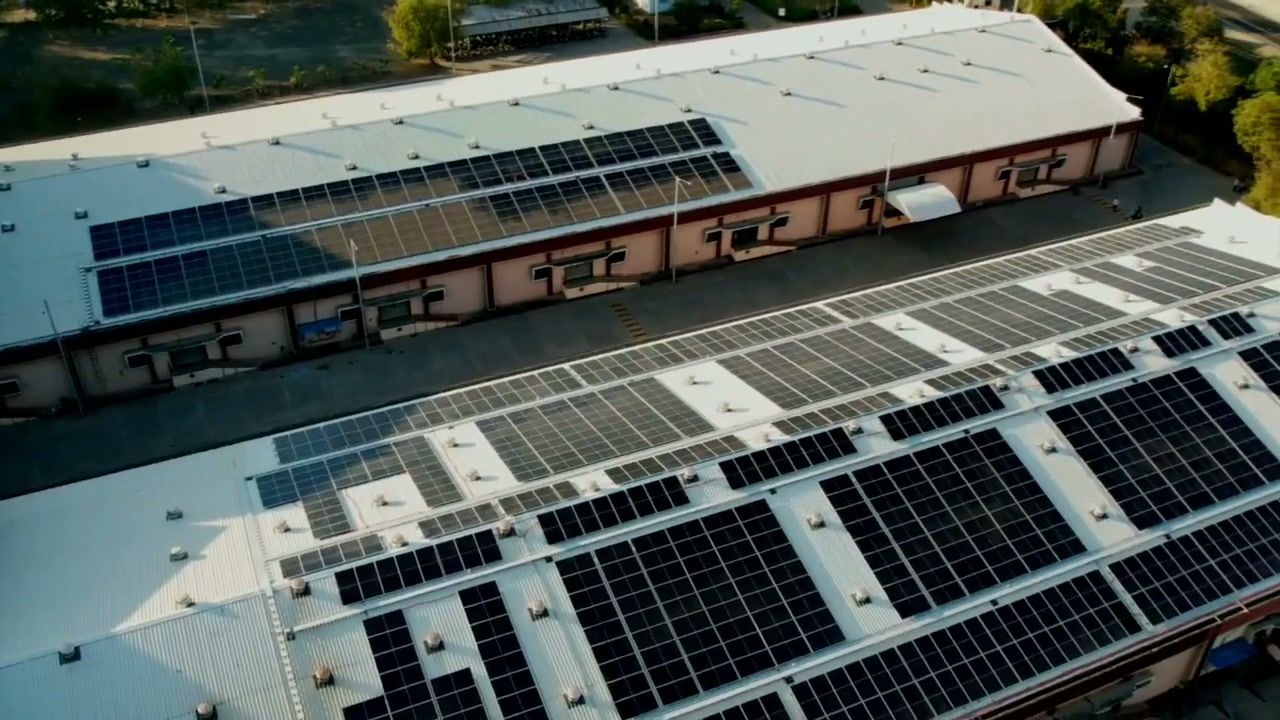
| Roofs | RCC terraces with waterproofing at most plants on our list, metal sheet at the others, and parking areas that can take carports. |
| Load shape | A sharp rise at shift start, a plateau through the day and a fall by evening, over a small round-the-clock base from conditioned stores. |
| What limits the design | Waterproofing on RCC, clean assembly areas below the roof, power quality, and surplus on the weekly off. |
| Realistic solar role | A large share of weekday daytime consumption, with weekend surplus sized to your state's export rules. |
Site design
RCC terraces, sheet roofs and parking
Our electrical and electronics plants include RCC roofs, metal sheet roofs and a rooftop-plus-carport site. Each design starts from the building, the load curve and the reporting your group needs.
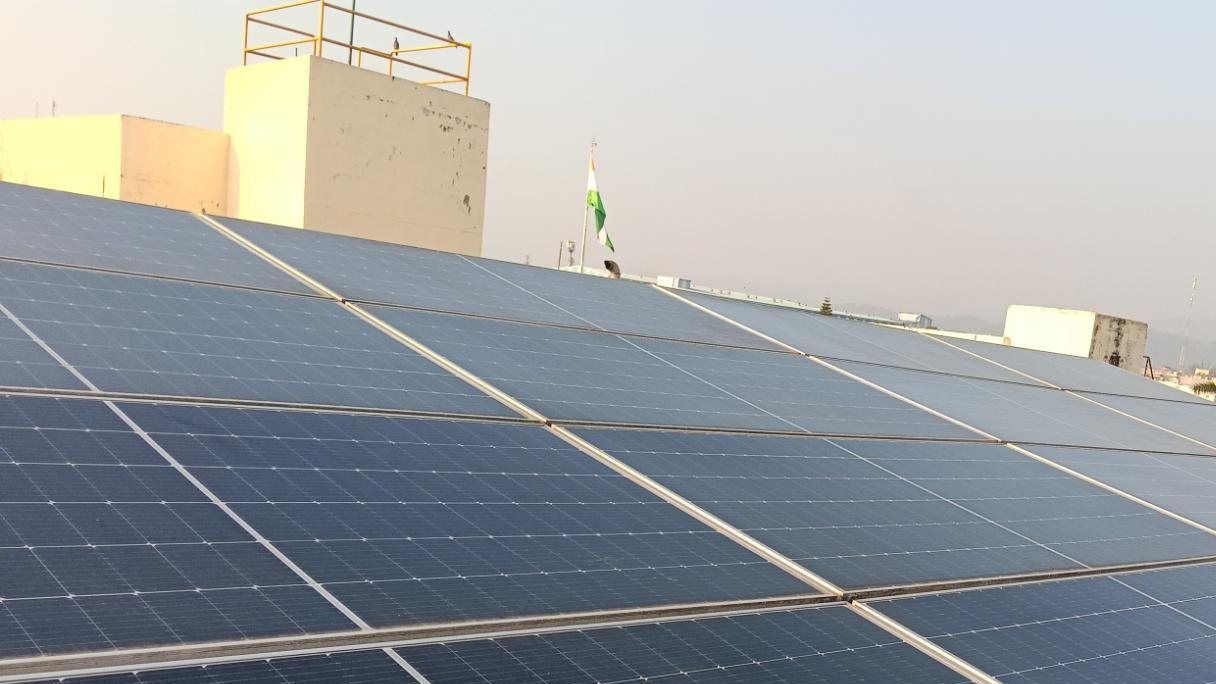
- Ballasted structures, or anchored ones with the waterproofing made good at every anchor
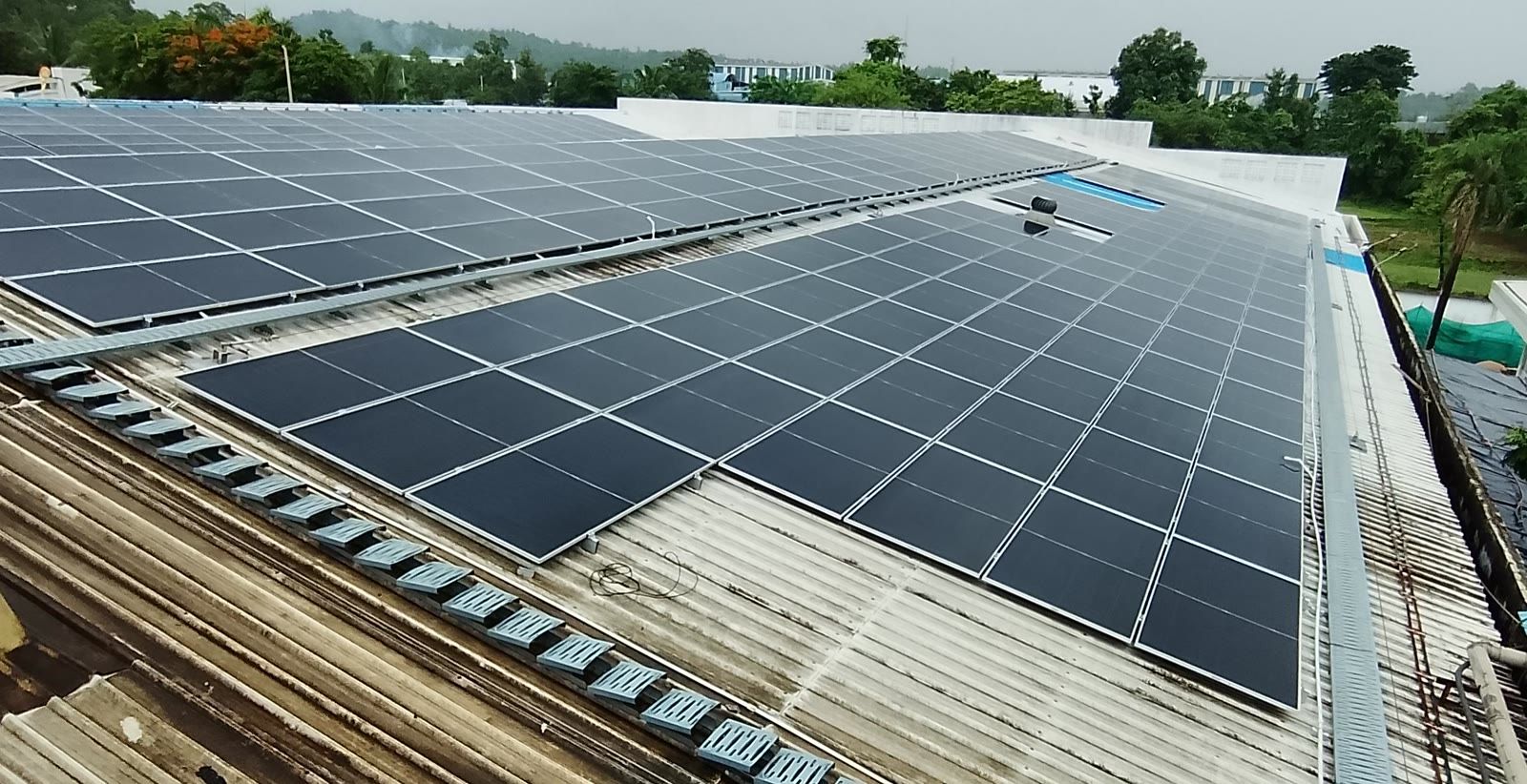
- Metal sheet mounting designed to comply with OEM installation guidelines
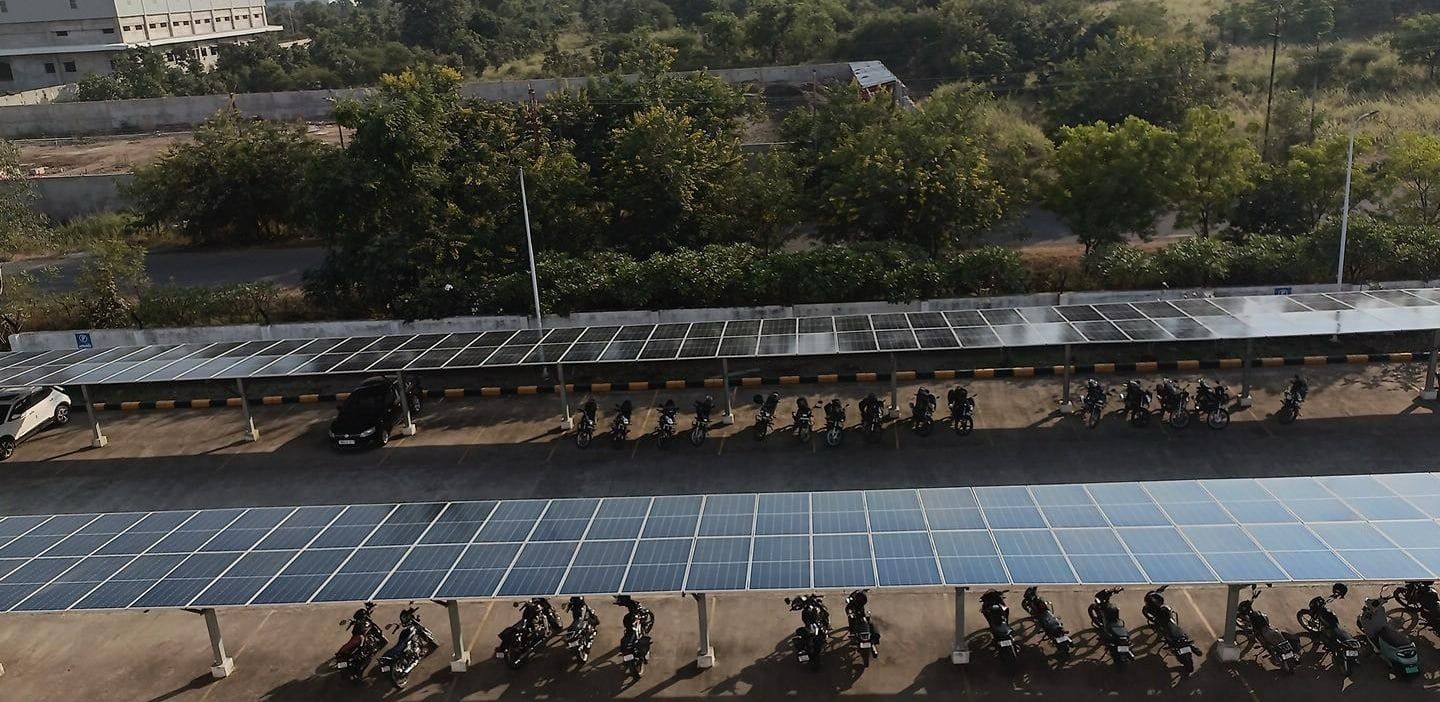
- Carports over staff and visitor parking where roofs are limited, ready for EV charging
- Connection point and protection settings agreed with your electrical team, because electronics lines are sensitive to power quality
- Generation, PR and alerts visible on Asset Connect for ESG reporting
Finance
The asset on your books, or power on a tariff
Listed groups and multinational subsidiaries often have firm views on owning plant versus buying power. We offer both.
CAPEX: you own the plant
Own the plant, book the asset and keep all the savings. Our CAPEX projects return 25%+ IRR. A Pune plant returned 50%+ IRR and paid back in under 2 years.
How CAPEX worksPPA / OPEX: you buy the units
Buy solar power without adding an asset: Adhvanik owns the plant, and you pay an agreed tariff, below the grid rate, per unit generated on 5–25 year PPAs, with PPAs running to 2040 and 2051.
How a PPA worksCase studies
Legrand across two states, Atomberg at Pune
Legrand India
Haridwar + Sinnar (Nashik)
Plants in two states run as one programme, with one monitoring platform and standardised equipment across the sites.
Read the case studyAtomberg Technologies
Pune (Khed), Maharashtra
A metal sheet rooftop sized to a load that runs mostly in daylight, built on string inverters.
Read the case study
On the project list
Where the sector's plants sit on the list
- Horiba – NagpurCarport · 721 kWp
An RCC roof and a carport on one site, the combination described above.
Plant page - Legrand – NashikMetal sheet roof · 1,300 kWp
RCC roof at Nashik, one of several Legrand sites on our list, alongside Haridwar and Sinnar.
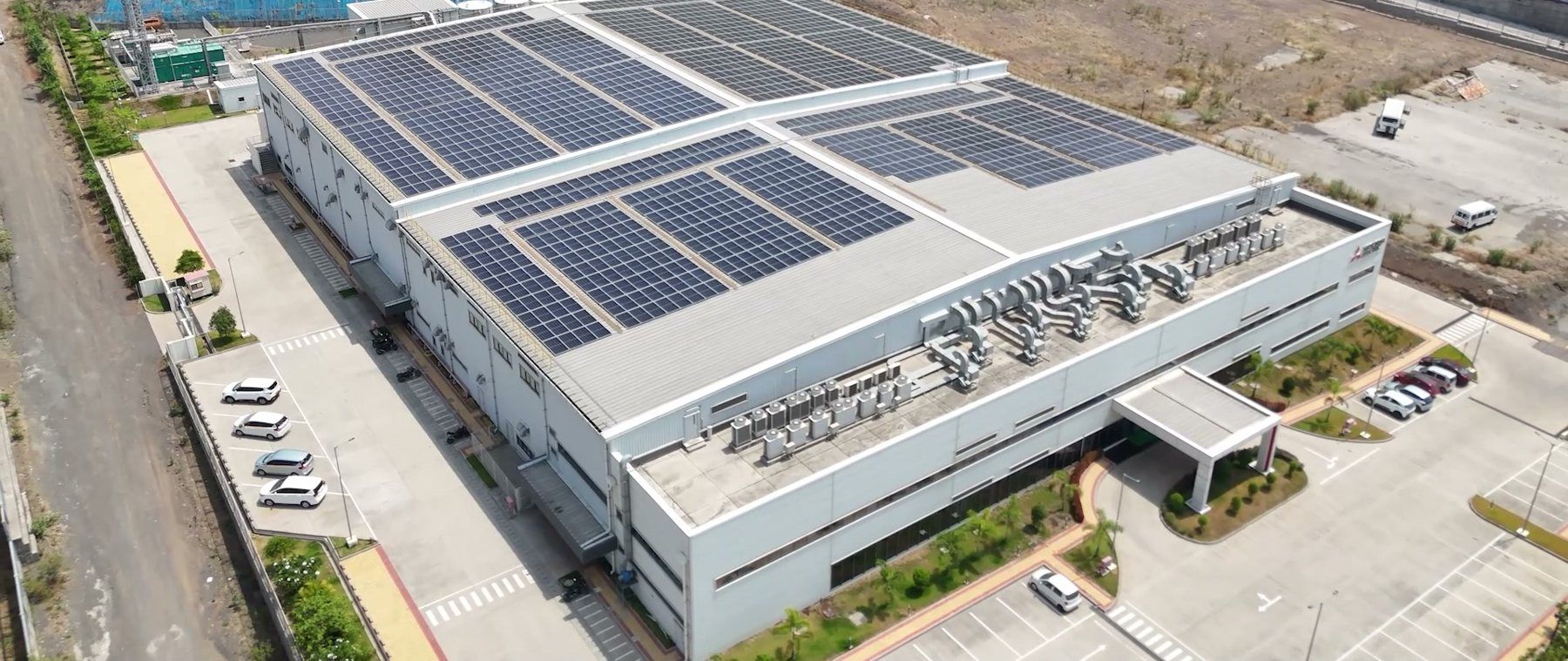
Plant page - Mitsubishi Electric – PuneMetal sheet roof · 1,000 kWp
Metal sheet roof in Pune, where Atomberg has a metal sheet plant as well.
Plant page
Common questions
Sundays, reporting, RCC roofs and parking
Questions from operations, EHS and sustainability teams at assembly plants.
Speak with an industrial solar engineerWhat happens on Sundays and plant holidays, when the building uses almost nothing?
The plant keeps generating while the building draws little. Your state's metering rules decide what the surplus earns, and the study reads them before it sizes the plant. In some states a smaller plant that is used in full on working days gives the better return.
Can you give us data for our sustainability report?
Yes. The plants we maintain report generation, performance ratio and irradiance on Asset Connect, with monthly engineer-signed reports. Your team can use those figures for renewable-electricity and emissions reporting.
Our roof is RCC with waterproofing. Will the structure damage it?
On RCC we use ballasted structures, or anchored ones with the waterproofing made good at every anchor, chosen for the slab. Walkways and safety lines are designed into the layout so maintenance traffic does not wear the roof.
We have little roof space. What else can we use?
Parking areas can carry solar carports, which give shade and generation and are ready for EV charging. Spare land inside the boundary can take a ground-mount array. For loads larger than the site can serve, open access solar wheels power from an offsite plant.
Can one agreement cover plants in different states?
Yes. Our Legrand case study covers plants in two states run as one programme, with one monitoring platform and standardised equipment, so the same spares fit every plant. Each site is still engineered for its own roof and state rules.
What guarantees come with the plant?
Each O&M contract guarantees 95% uptime and a performance ratio; generation lost below the guarantee is credited at ₹3.00/kWh. Maintenance contracts run up to 25 years. Manufacturer (OEM) warranties on modules, inverters and other equipment. We handle the claims with the manufacturer, so you don't have to.
Projects
Switchgear, appliance and automation sites
Switchgear, appliance, automation and instrument makers. City and state only, newest first.
- 519 kWp
Zeeta Electrical – Sanand
Gujarat
Commissioned Aug 2026
- 1,300 kWp
Legrand – Nashik
Maharashtra
Commissioned May 2026
Mitsubishi Electric – Pune
Maharashtra
Commissioned Feb 2026
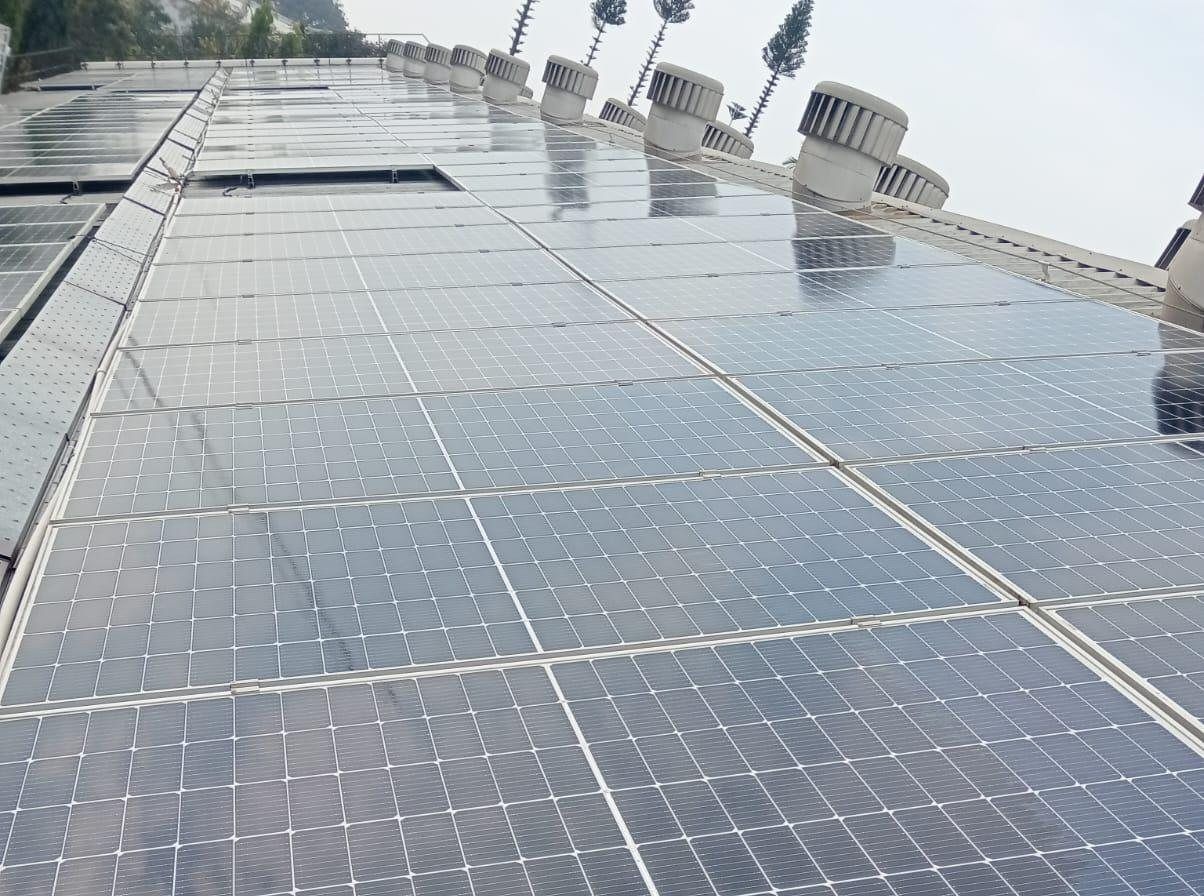
Legrand – Sinnar, 141 kWp
Maharashtra
Commissioned May 2025
Horiba – Nagpur
Maharashtra
Commissioned Sep 2024
- 1,238 kWp
Atomberg – Pune
Maharashtra
Commissioned Jun 2024
Legrand – Haridwar
Uttarakhand
Commissioned Jan 2024
- 508 kWp
Legrand – Sinnar, 508 kWp
Maharashtra
Commissioned Apr 2022
Guides and glossary
Guides on exports, metering and reporting
- Behind-the-meter or net metering: which suits your site?Read the guide
- Performance ratio (PR): how to judge a plant after commissioningRead the guide
Terms used on this page
Free feasibility study
Model solar for your assembly plant
Tell us the site and your monthly bill. An engineer responds within 48 hours. You get an ROI sheet, a policy check, roof feasibility and a budgetary quote.
What the study covers
- Financial ROI sheet based on a preliminary design
- Budgetary quote
- Roof feasibility and the area available for installation