
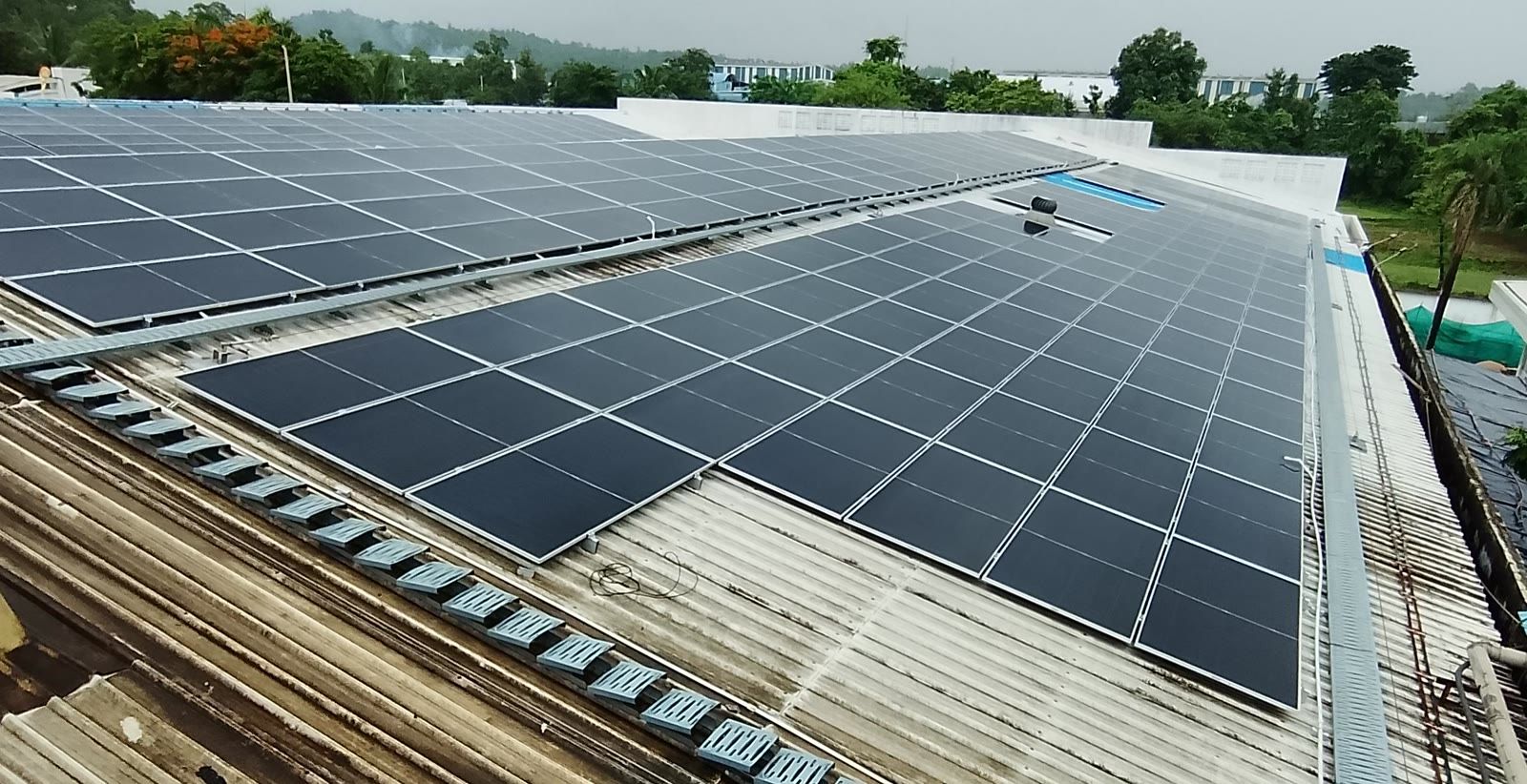
Metal sheet roofs
Rooftop solar for metal sheet factory roofs
Whether a tin shed roof can carry a power plant depends on the sheet, the purlins under it and the wind at your site. Your structural engineer confirms the roof can take the load; Adhvanik Energy designs the mounting and structure, then builds and maintains the plant.
- typical plant delivery
- 90–100 days
- factories under active maintenance
- 170+
- maintenance contracts available
- 25-year
Engineering
Mounting, purlins and wind: what decides if a shed can carry a plant
The questions a plant head asks first, and what we do about each.
- 01Mounting and warranty
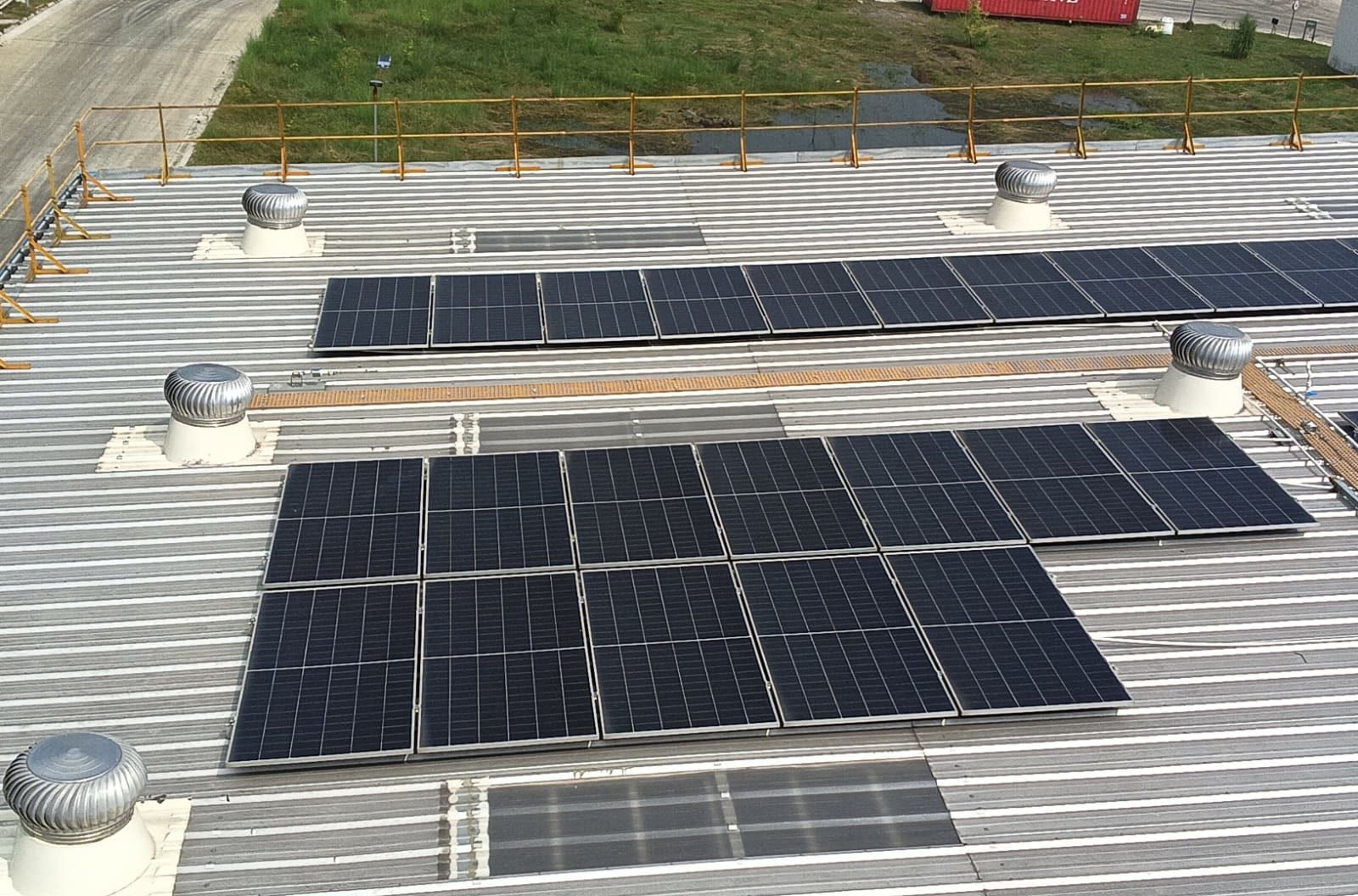
- In many cases the structure is fixed through the sheet. If you want a zero-leakage roof, we use non-penetrating adhesive or clamp mounting instead: clamps grip the seam or rib of the sheet, and adhesive bonds the rail to its surface. Your sheet profile decides which fits. Either way, the mounting is designed to comply with OEM installation guidelines and protect applicable warranties.
- 02Purlins and trusses
- Purlins are the horizontal beams the sheets rest on, and trusses carry the purlins. They were sized for the sheet, the wind and a maintenance load, not for modules and rails. We do not assess the purlins or the roof’s load capacity ourselves: your structural engineer confirms the roof can carry the plant before the layout is fixed, and we can refer one if you need it.
- 03Wind
- We design the structure for the wind speed under IS 875, as applicable.
- 04Sheet condition
- A solar plant cannot fix corroded or leaking sheets, and they are far harder to repair once modules sit on top. If a bay has fewer years left than the plant will run, re-sheet it before installation. That costs much less than lifting modules off later.
- 05Ventilators and skylights
- Turbo ventilators, ridge monitors and skylights stay clear and reachable. Laying the array around them also keeps their shadows off the modules.
- 06Metering
- Net-metered or behind-the-meter. Behind the meter, the factory uses what the plant makes; net metering credits surplus units exported to the grid. Your state’s rules decide whether net metering is open to a plant your size, and which pays better: see the state solar policy pages.
Site check
Which sheds qualify, and what we check first
A roof check sorts the sheds that can take a plant from the ones that need repair first.
A good fit when
- Galvalume or colour-coated sheets in sound condition, with years of service left
- Large, unshaded roof areas over production halls, stores or warehouses
- Purlins and trusses that a structural engineer confirms can carry modules and rails
- A daytime load that runs most days of the week, so the factory uses what the roof produces
- Safe access to the roof for installation and for the crews who clean it later
What we check first
- Sheet age, corrosion and existing leaks, so you know which bay to re-sheet first
- A structural engineer’s sign-off on the roof’s load capacity (yours, or one we refer)
- Skylights, turbo ventilators and ridge monitors that cast shade or must stay reachable
- Asbestos-cement or translucent sheets, which cannot take a person’s weight and need their own rules
- The cable route from roof to LT panel, and the metering arrangement your DISCOM allows
Safety
Walkways, handrails and rules for fragile sheets
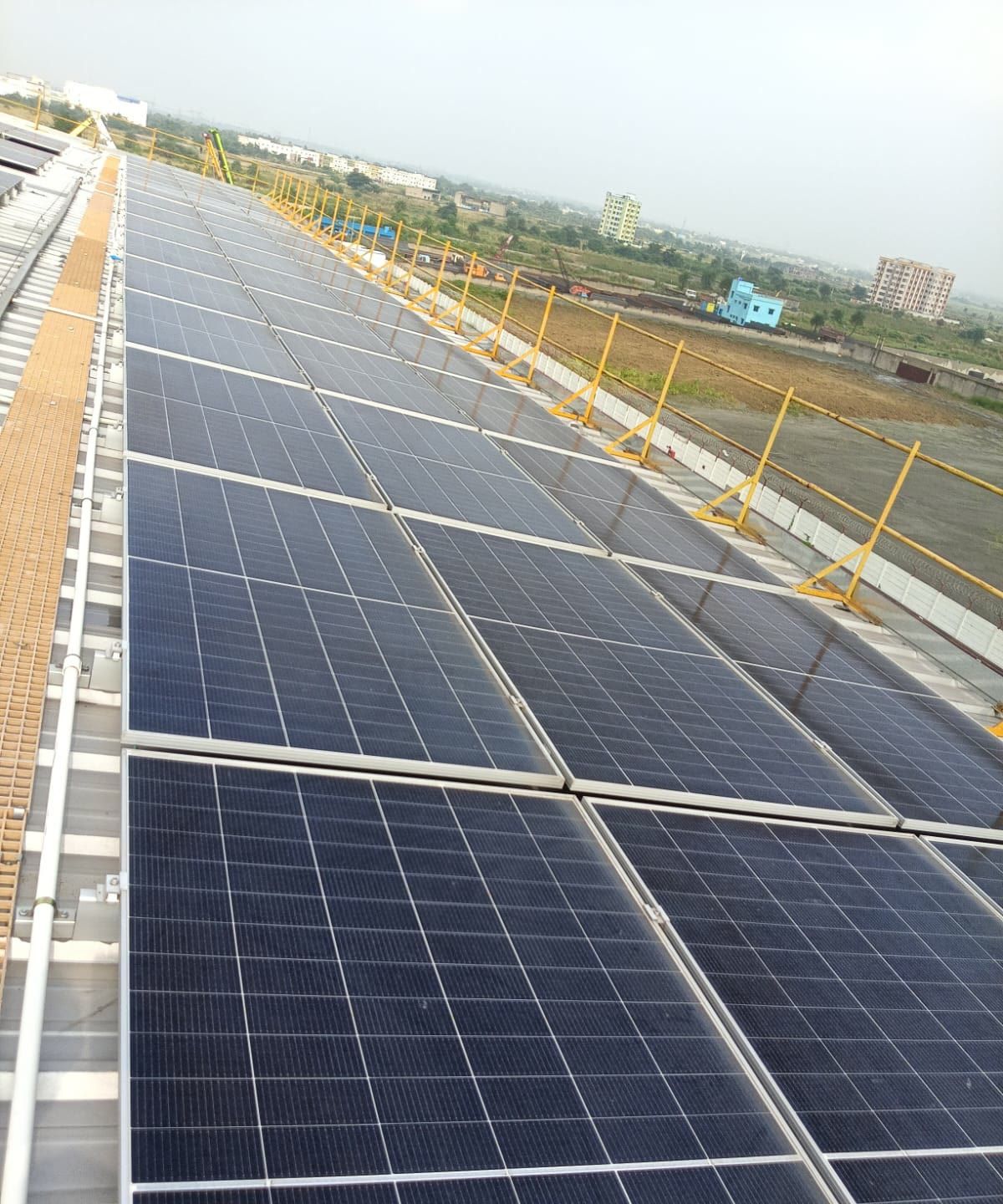
Your maintenance staff, cleaning crews and inspectors will all work on this roof for as long as the plant runs. Safety is drawn into the first layout.
- Dedicated safety department
- Site-level safety inspections
- Mandatory walkways and safety lines
- Handrails and safety mesh based on site risk assessment
- Documented closure of every EHS observation
Installation
What installation asks of your site
Most of the work happens on the roof. A few things need you.
The crew works at height, so we agree exclusion zones below the work area and working hours with your plant head before the first day, so your line keeps running.
The connection to your LT panel needs a short planned shutdown of the feeder, which we schedule with your electrical team. DISCOM approvals for the interconnection run in parallel with the build.
What we need from you
- Roof access
- A safe route to the roof for crews and material, and permission to fit temporary edge protection while work is under way.
- Storage
- A dry laydown area near the building for modules, rails and cable.
- Cable route
- A path from the roof to the inverter location and LT panel, agreed at design stage.
How it works
From feasibility to first unit
Before any layout is drawn, a structural engineer confirms the roof can carry the plant. We can refer one.
- 01
Feasibility
An ROI sheet, a policy check, roof feasibility with the area available, and a budgetary quote.
- 02
Design
Array laid out around ventilators and skylights, structure designed for wind under IS 875, walkways drawn in.
- 03
Build
Adhvanik designs, procures, builds and commissions the plant, with a 1-year defect liability period on the entire installation.
- 04
Operate
Monitoring on Asset Connect and monthly engineer-signed reports.
Operations
After commissioning: cleaning, monitoring and who answers
Generation, performance ratio and alerts for your plant are tracked on Asset Connect. An engineer signs a report for you every month. Cleaning quality is audited with AI-enabled checks.
Across the plants we maintain, average asset uptime is 99%. The contract commitment is the 95% uptime guarantee plus a performance-ratio guarantee. Lost generation is credited at ₹3.00/kWh.
What to expect
- Remote response
- Within 1 working day of an alert.
- Engineer on site
- Within 2 working days, if the fault cannot be fixed remotely.
- Your roof team
- Walkways and safety lines stay in place, so your staff reach ventilators, gutters and skylights without stepping on a fragile sheet.
Components
What goes on your roof, from modules to earthing
Tier-one components, specified plant by plant. Your technical proposal lists the exact makes and ratings.
| Component | Specification |
|---|---|
| Solar modules | N-type TOPCon modules from tier-one makers, monofacial or bifacial to suit the roof |
| Inverters | String inverters sized to the array, with remote monitoring built in |
| Cables | UV-resistant solar DC cables on the roof; armoured AC cables to your LT panel |
| Switchgear | AC and DC distribution boxes with surge protection, tied into your LT panel |
| Structure | Galvanised steel structure, designed for the wind speed under IS 875 as applicable |
| Earthing | Earthing and lightning protection for the whole plant |
Why Adhvanik
One team from feasibility to the monthly report
On a shed roof the roof check, the design and the maintenance all depend on each other. Splitting them across three companies is where problems start.
The engineers who design also build and maintain
Adhvanik designs, procures, builds and commissions the plant. 1-year defect liability period on the entire installation. Manufacturer (OEM) warranties on modules, inverters and other equipment. We handle the claims with the manufacturer, so you don't have to.
Every design is checked twice
Layouts, structures and bills of quantities are prepared on Adhvanik Central, and AI checks review each design for errors.
Buy the plant, or buy the power
CAPEX: you own the plant from day one, with the highest lifetime savings. PPA / OPEX: Adhvanik invests, owns and runs the plant; you pay per unit, with zero upfront investment and a tariff set in the contract, below your grid rate. A PPA runs for years, so the sheets have to outlast it.
How CAPEX works · How a PPA works · Compare CAPEX and PPA for your factoryNet metering, gross metering and choosing an installation type
Guides: Metal sheet, RCC, ground mount or carport: choosing the installation · Behind-the-meter or net metering: which suits your site?
Glossary: Net metering · Gross metering · kWp vs kW · Full glossary
Projects
Metal sheet roofs we have built
Recent plants on metal sheet roofs, one per client where possible, newest first. Capacities are DC unless marked AC.
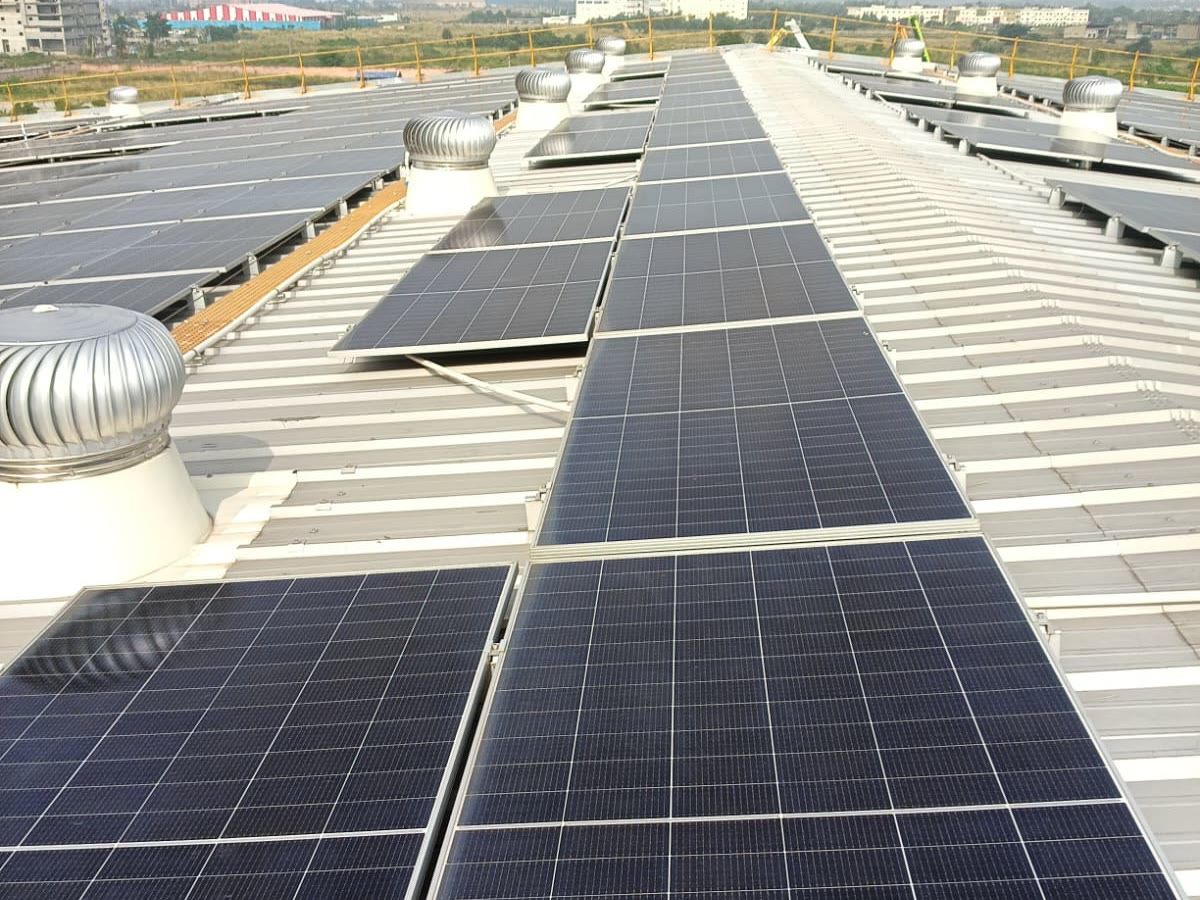
MYK Laticrete – Durgapur
West Bengal
Commissioned Oct 2026
- 531 kWp
FUSO Glass – Sriperumbudur
Tamil Nadu
Commissioned Oct 2026
- 450 kWp
MYK Laticrete – Vadodara
Gujarat
Commissioned Sep 2026
- 1,009 kWp
Exotic Fruits – Krishnagiri
Tamil Nadu
Commissioned Aug 2026
- 519 kWp
Zeeta Electrical – Sanand
Gujarat
Commissioned Aug 2026
- 332 kWp
HUL – Haridwar, 332 kWp
Uttarakhand
Commissioned Jul 2026
Read the case studies
Common questions
Mounting, wind, purlins and old sheets: answers
What plant heads and facility managers ask before a plant goes on a shed roof.
Speak with an industrial solar engineerWill solar void the warranty on our roof sheets?
Designed to comply with OEM installation guidelines and protect applicable warranties. We fix through the sheet in many cases; if you want a zero-leakage roof, we use non-penetrating adhesive or clamp mounting chosen for your sheet profile. Ask us for the method we propose for your sheet make and check it against the sheet maker’s terms before you sign.
Our sheets are old. Can we still put solar on them?
Yes, if the sheets under the array have more years left than you need from them. If some bays are close to the end of their life, re-sheet them first so the plant never has to come off. The roof feasibility check in our feasibility study shows which bays need attention.
What stops the wind lifting the plant off a light roof?
We design each structure for the wind speed under IS 875, as applicable.
What if the purlins cannot carry the extra weight?
We do not check purlins or the roof’s load capacity ourselves. Before you commit, a structural engineer should confirm what the roof can carry: your own, or one we refer you to. If some bays are weak, they can be strengthened or the array can skip them.
Can our maintenance team still walk on the roof?
Yes. Mandatory walkways and safety lines are part of every design, with handrails and safety mesh based on site risk assessment.
Should we choose net metering or behind-the-meter?
It depends on your state rules and how much of the output your factory uses during the day. Net metering suits plants that export surplus on weekends or holidays; behind-the-meter suits factories that use everything the roof produces. The feasibility study includes a net-metering and policy check for your state.
Who looks after the plant once it is running?
Our own O&M team. Contracts carry a 95% uptime guarantee plus a performance-ratio guarantee. Lost generation is credited at ₹3.00/kWh. Maintenance contracts are available for up to 25 years.
Free feasibility study
Find out what your sheds can carry
The feasibility study is free, takes 7 days and carries no commitment. An engineer replies within 48 hours.
What the study covers
- Financial ROI sheet based on a preliminary design
- Policy check for your state and connection
- Roof feasibility and the area available for installation