
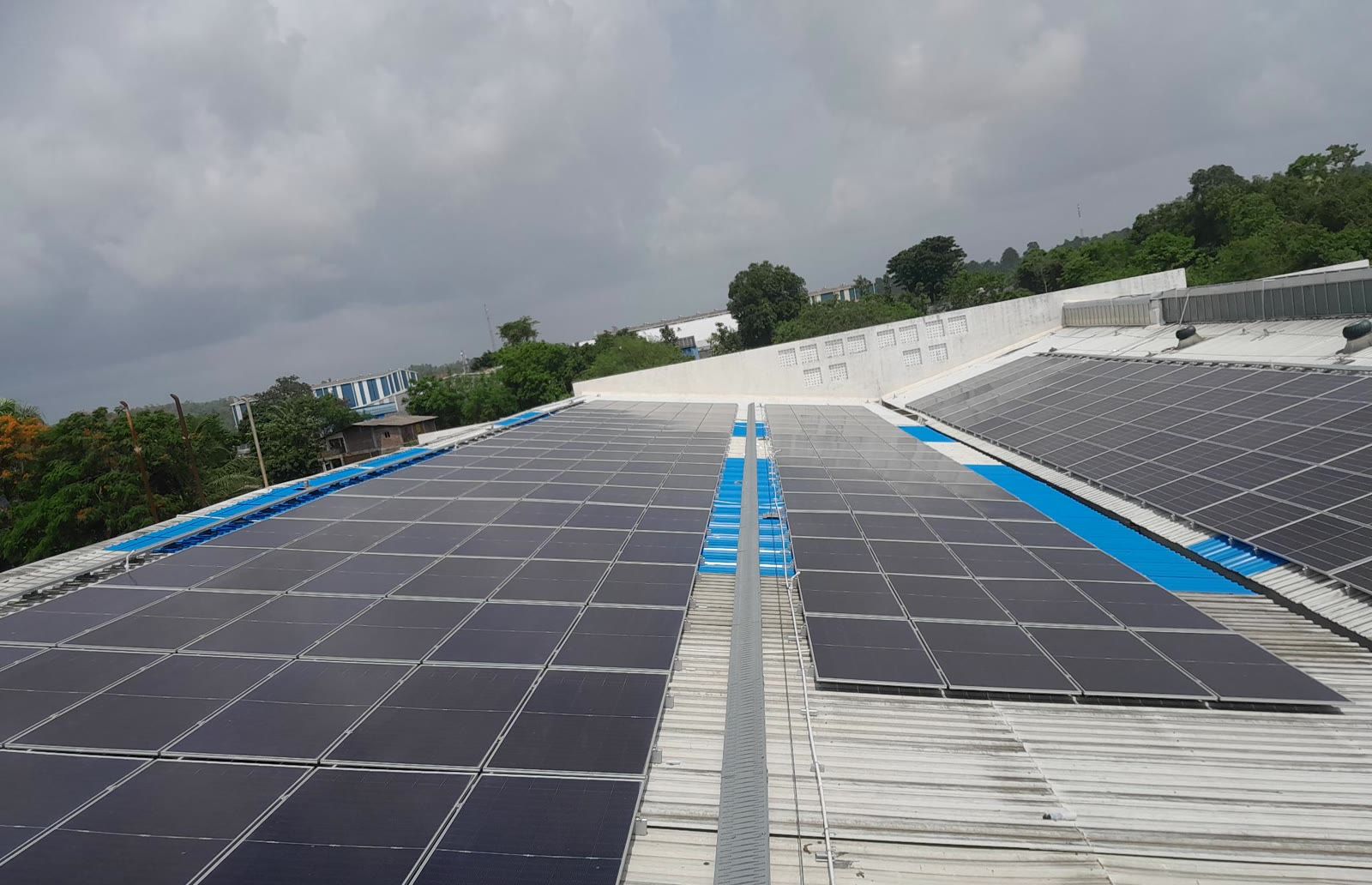
Packaging & printing
Rooftop solar for packaging and printing plants
Film extruders, presses and laminators run long hours, and solvent areas decide where equipment can sit on the roof. We build on metal sheet roofs around those limits, and give you measured generation data to report to brand-owner customers.
Packaging and print clients
- Clients
- Siddhi Vinayak Flexipack
- New Jack Printing
- Shrotra Enterprises
- Shree Arun Packaging
- Hexagon Prints
- Apple Flexipack
- States
- Madhya Pradesh · Maharashtra · Gujarat
- Installation types
- Metal sheet roof
- Most recent commissioning
- Jun 2026
Converting plant
Shifts, roof and risks at a packaging or print plant
| Operating pattern | Two or three shifts. Film extrusion often runs continuously, and orders surge ahead of festivals and launches. |
|---|---|
| Roofs | Metal sheet halls with exhaust outlets and roof vents. Most packaging and print plants on our list with a recorded roof type are on sheet roofs. |
| Load shape | A strong daytime plateau, with extruders holding a base load overnight. |
| What limits the design | Solvent-handling areas, exhaust plumes, film and paper stock as fire load, and keeping cable routes out of classified zones. |
| Realistic solar role | A solid share of the daytime load, plus measured generation data for customer sustainability questionnaires. |
Process energy
Extruders, presses and laminators on long shifts
A converting plant strings several machines together: film extruders, gravure and flexo presses with drying tunnels, laminators, slitters and rewinders, then pouch and bag machines. Carton and corrugated plants add corrugators, die-cutters and folder-gluers. Compressors and chillers serve all of them.
Extruders often run continuously, while printing and converting follow order books that build ahead of festivals and product launches by brand owners. Most plants run two or three shifts, so the daytime base is strong. Print halls hold temperature and humidity steady to keep registration and ink behaviour consistent, which adds an afternoon cooling load.
On a metal sheet roof a plant can supply a meaningful share of that daytime load, with little or no export.
Presses and dryers
Print units and their dryers are among the largest continuous loads in a converting plant.
Lamination and slitting
Laminators, slitters and rewinders run beside the presses for every shift.
Print-hall climate
Temperature and humidity control keep print quality steady, and load rises with the afternoon heat.
Customer scrutiny
FMCG brand owners ask packaging suppliers about emissions, and on-site solar is a measurable step.
Safety layout
Layouts around solvent areas and exhaust outlets
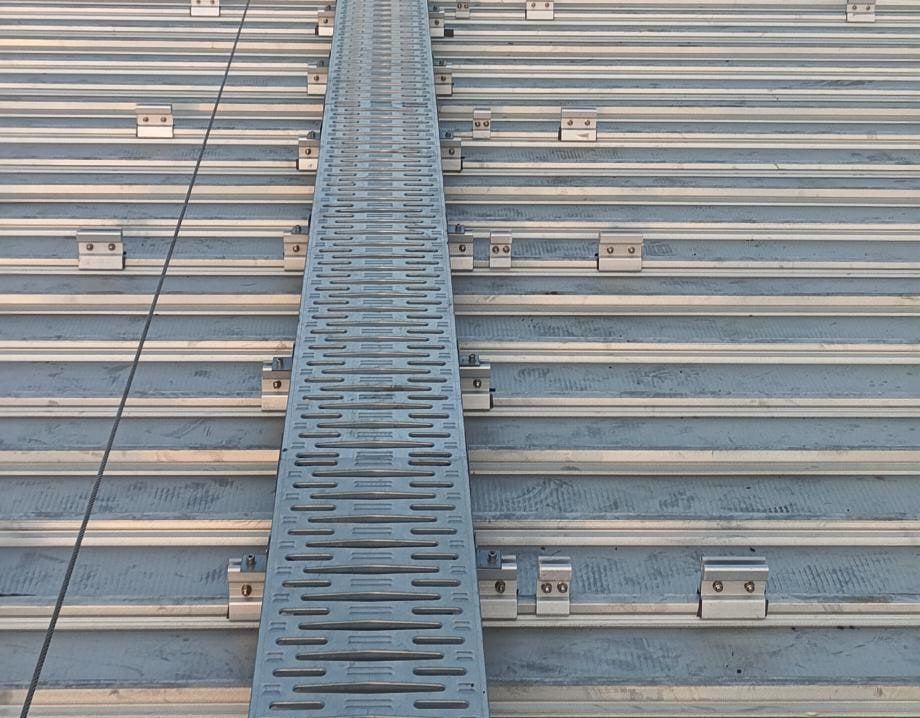
Most packaging and printing plants on our list are metal sheet rooftops. These buildings often have solvent-handling areas and exhaust outlets, so layout, cable routing and access are planned with your safety team.
- Mounting that clamps or bonds to the sheet instead of piercing it, so the warranty holds
- Array layouts kept clear of exhaust outlets, vents and skylights
- Inverters and junction boxes placed away from solvent stores and classified zones, with isolation points agreed in writing
- Cleaning planned for any film left on modules by exhaust plumes
- Walkways, handrails and safety mesh based on a site risk assessment
Finance
CAPEX or PPA for a converting plant
Converting plants keep investing in presses and lines. You can keep that capital free and buy the power instead, or own the solar plant as one more productive asset.
CAPEX: you own the plant
Own the plant outright. Our CAPEX projects return 25%+ IRR. A Pune plant returned 50%+ IRR and paid back in under 2 years. A multi-shift load uses nearly every unit generated.
How CAPEX worksPPA / OPEX: you buy the units
We fund, build and run the plant, and bill an agreed tariff, below your grid rate, for each unit it generates.
How a PPA worksOn the project list
Packaging and print plants on the list
- Apple Flexipack – IndoreMetal sheet roof · 565 kWp
Flexible packaging on a metal sheet roof at Indore. Siddhi Vinayak Flexipack is a second Indore plant on the list.
Plant page - Shrotra Enterprises – SarigamMetal sheet roof · 1,300 kWp
Metal sheet roof at Sarigam in Gujarat, where Arihant Gold Plast, a polymer plant, is also on the list.
Plant page - Hexagon Prints – PalgharMetal sheet roof · 350 kWp
A print plant at Palghar, Maharashtra, on a metal sheet roof.
Plant page
Common questions
Solvents, sizing and extensions
Converting plants handle solvents, heat and tight delivery schedules. These are the questions that follow.
Speak with an industrial solar engineerIs a rooftop plant safe above a print hall that handles solvents?
Yes, when the layout keeps equipment out of solvent areas. Inverters, junction boxes and cable runs are kept away from solvent stores and classified zones, and their locations and isolation points are agreed with your safety team. Our dedicated safety department runs site-level inspections, and every EHS observation is closed and documented.
Can solar help us answer customer sustainability questionnaires?
Yes. You get measured generation data from Asset Connect and monthly reports, which you can use to show the renewable share of your electricity.
Do exhaust fumes or ink mist leave a film on the modules?
They can. Exhaust outlets are mapped before design, arrays sit clear of them, and monitored performance shows if any residue is cutting output, so cleaning is triggered by the data.
How do you work out the plant size?
From three inputs: the usable roof area once vents, skylights and access routes are set aside; your daytime load from the bills; and your state's metering rules, which decide what happens to any surplus. Send a rough roof area with the enquiry and the feasibility study turns it into a sized, costed design.
Can we add capacity later as we add lines?
Yes. A plant can be designed for the whole roof and built in stages, or extended when a new hall goes up. Some clients on our project list have extensions to plants we built earlier.
Who maintains the plant?
We do, with our in-house O&M team. Contracts run up to 25 years and the plants we maintain average 99% uptime.
Projects
Print and packaging sites
Flexible packaging, print and carton sites in Madhya Pradesh, Maharashtra and Gujarat. City and state only.
- 515 kWp
Siddhi Vinayak Flexipack – Indore
Madhya Pradesh
Commissioned Jun 2026
- 375 kWp
New Jack Printing – Bhiwandi
Maharashtra
Commissioned Jun 2026
- 1,300 kWp
Shrotra Enterprises – Sarigam
Gujarat
Commissioned Aug 2025
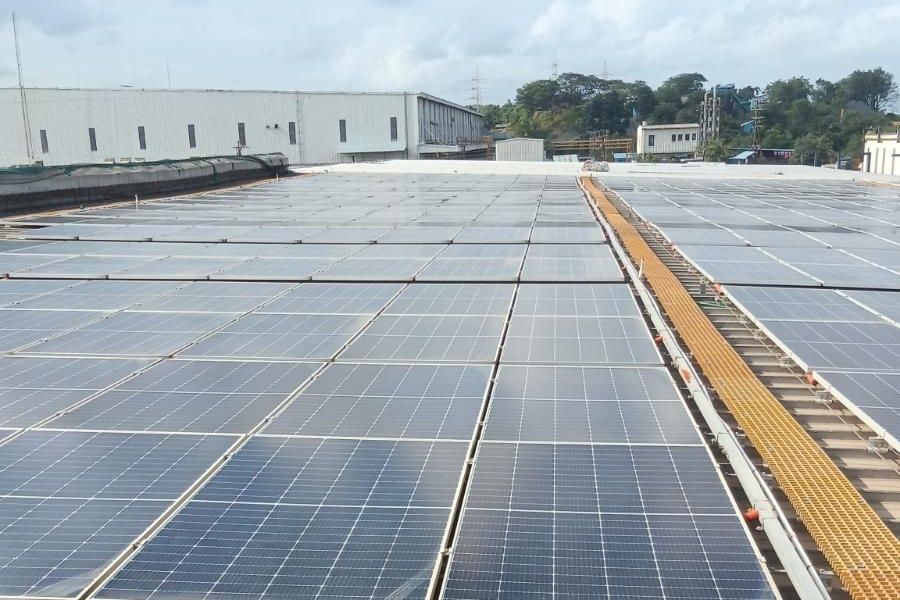
SAPCO – Mumbai
Maharashtra
Commissioned Apr 2025
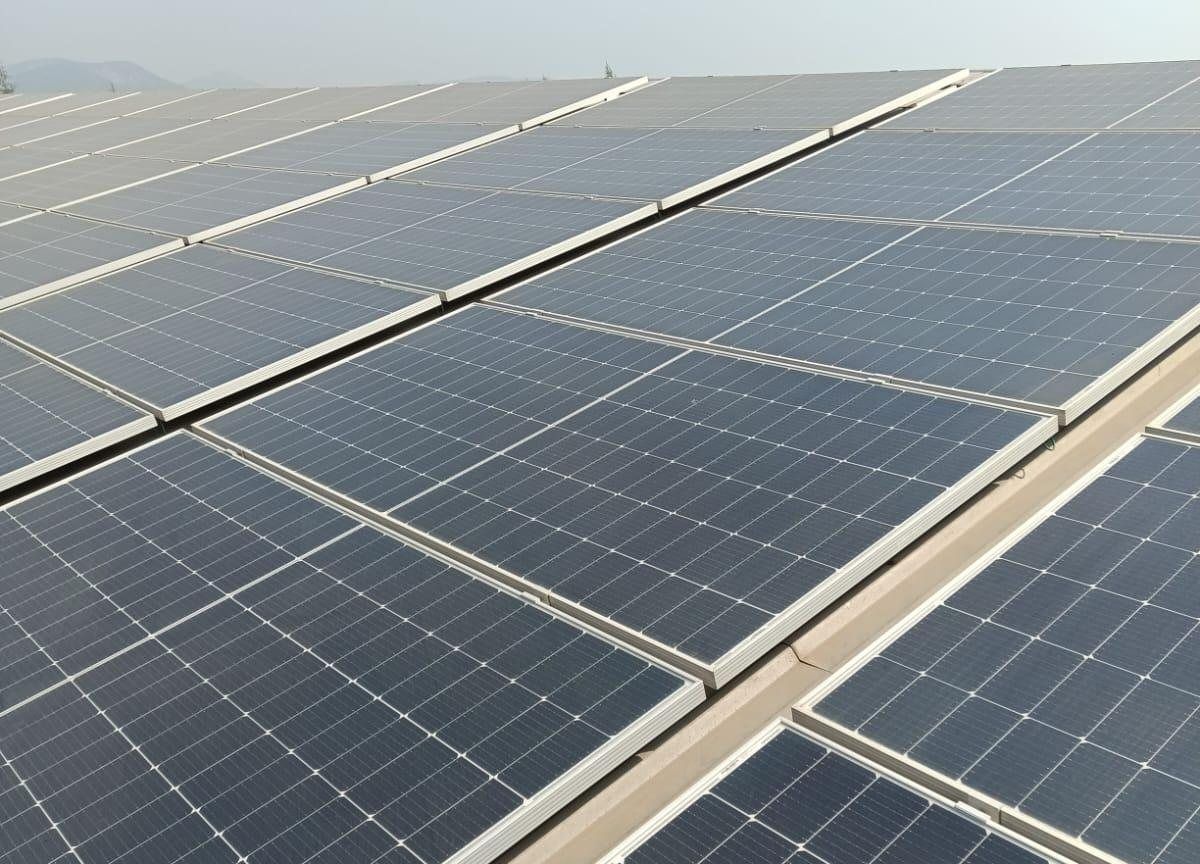
Hexagon Prints – Palghar
Maharashtra
Commissioned Apr 2025
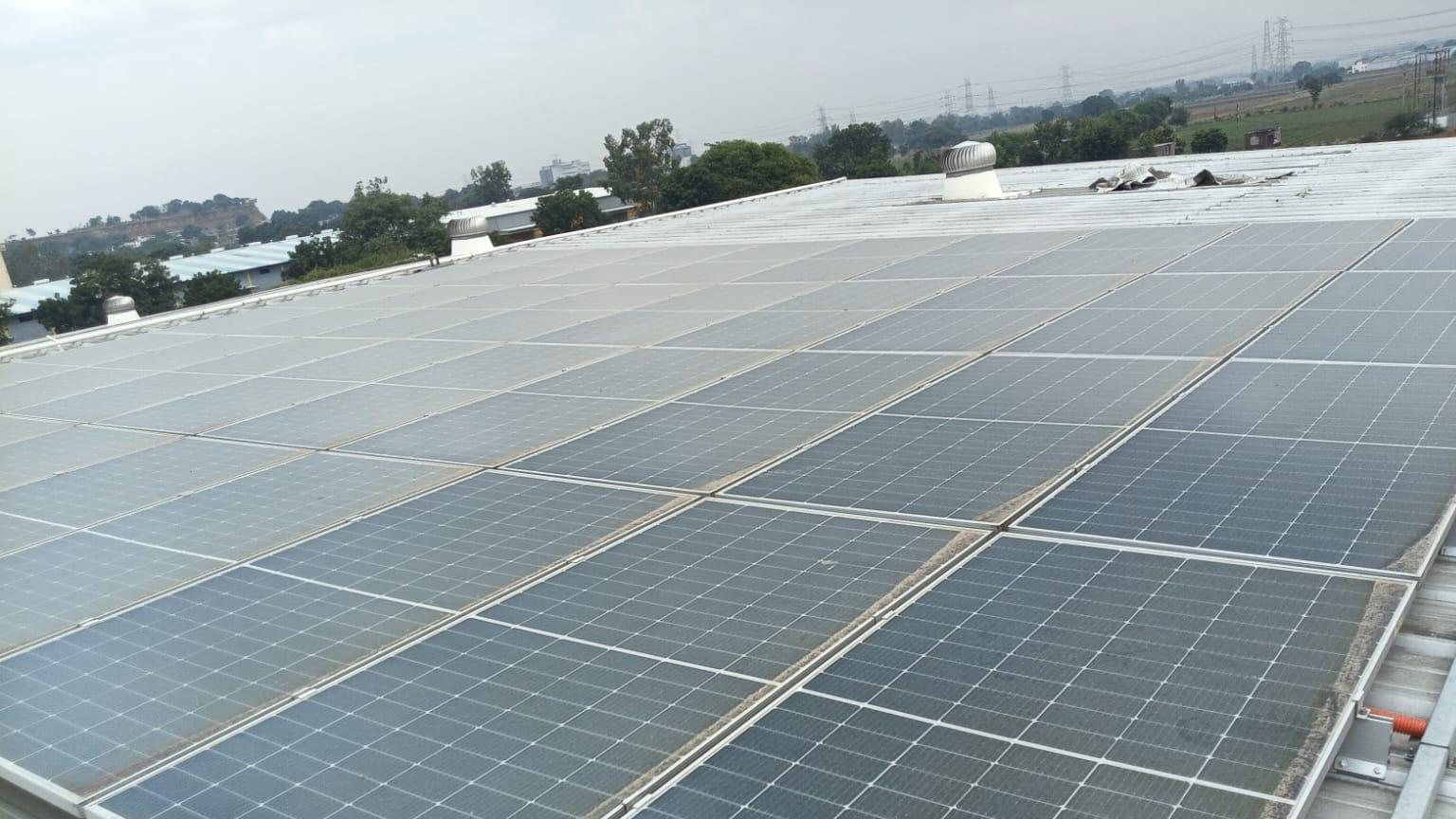
Apple Flexipack – Indore
Madhya Pradesh
Commissioned Apr 2025
Guides and glossary
How generation is measured and reported to customers
- Performance ratio (PR): how to judge a plant after commissioningRead the guide
- CAPEX or PPA: which solar model fits your factory?Read the guide
Terms used on this page
Free feasibility study
Cost out solar for your converting plant
Tell us where the plant is and what you pay each month. An engineer replies within 48 hours.
What the study covers
- Financial ROI sheet based on a preliminary design
- Budgetary quote
- Roof feasibility and the area available for installation