
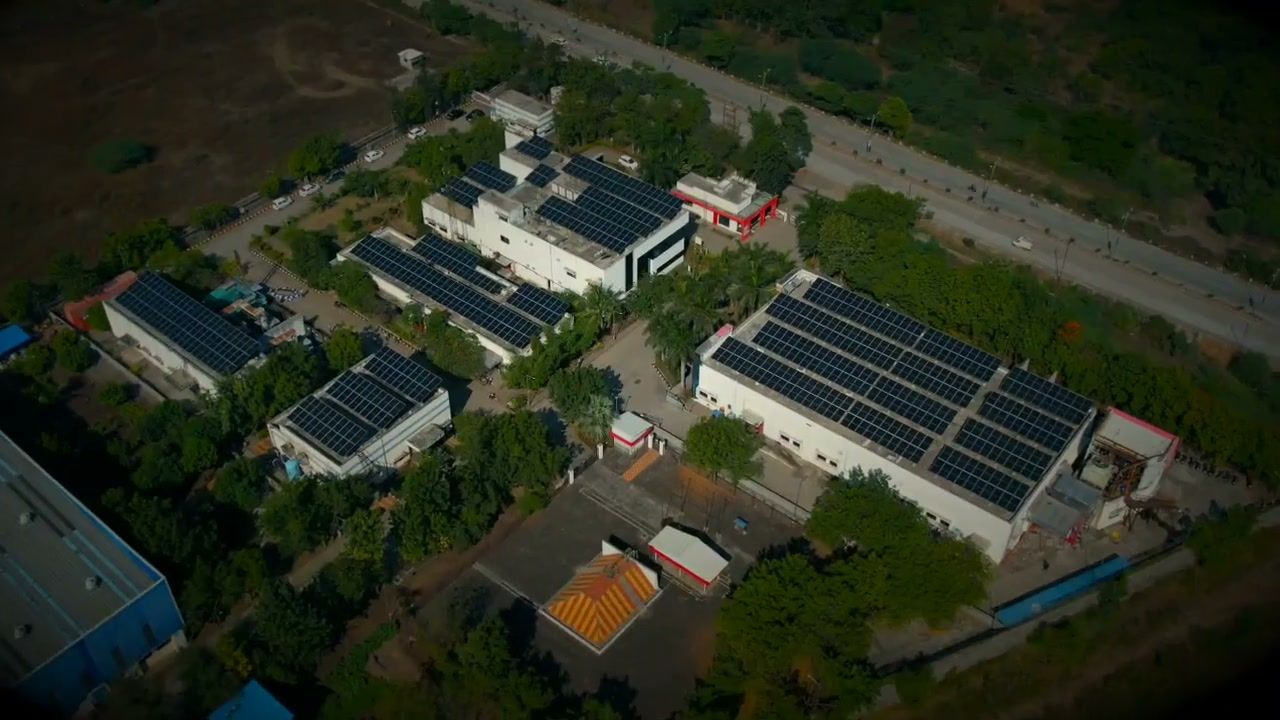
Agro & food processing
Solar for agro and food processing plants
A seed plant works hard for a few months after harvest and idles for the rest of the year. A food plant runs cold rooms and packing lines all year. We size each plant against your monthly consumption and not an annual average.
Agro and food sites
- Clients
- Mahyco
- Syngenta
- Ozpure FnB
- DP Cocoa
- DP Chocolates
- Lemken
- States
- Maharashtra · Andhra Pradesh
- Installation types
- Metal sheet roof · RCC · Ground mount
- Most recent commissioning
- Jul 2026
Demand profile
A seed plant and a chocolate plant use power on different calendars
Seed plants dry, clean, grade, treat and pack in a concentrated season after harvest, then hold stock in conditioned stores. Agricultural-equipment makers build ahead of the sowing season. These loads are real, but they are not flat across twelve months.
Food processors are steadier. Cocoa and chocolate lines, for example, need controlled room temperatures through the hot months, so cooling load climbs just when solar output peaks. Roasting, cooking and baking heat comes mostly from steam or gas, so the electrical load is cooling, motors and packing.
Many of these sites sit away from the metros, on rural feeders where voltage dips and outages can be more frequent, and many keep diesel sets for that reason. They also tend to have long roofs and spare land.
Sizing is the decision that matters most, and we make it against monthly consumption history. The study also shows how your state's metering and banking rules treat surplus units in the quiet months.
Seed processing season
Dryers, cleaners, graders, treaters and packing lines run flat out for a few months, then wind down.
Cold rooms and chillers
Produce, ingredient and finished-goods stores need controlled temperature every day of the year.
Packing and hygiene
Packing machines and the air handling for hygiene zones follow the production shifts.
Room to spread out
Campuses away from cities often have spare land inside the boundary as well as large roofs.
Season by season
How the year looks at a seed plant and at a food plant
| Seed plant, peak months | Processing runs on extended shifts for a few months after harvest. Consumption rises well above the quiet-month level. |
|---|---|
| Seed plant, quiet months | Stores stay conditioned and the plant draws much less, so the solar plant has surplus to place. |
| Food plant, all year | Two or three shifts with cold rooms and chillers running at night too, and cooling load rising in summer. |
| Roofs and land | Metal sheet processing and storage sheds, plus open land inside the boundary. Our agro plants on the list include both roofs and ground mounts. |
| What limits the design | Surplus in the quiet season, seed and grain dust, bird droppings on modules, and weaker rural grid supply. |
Case studies
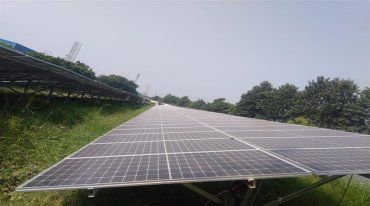
Mahyco at Buldhana: sized against several years of load data
Configuration
Sheet roofs first, then spare land inside the boundary
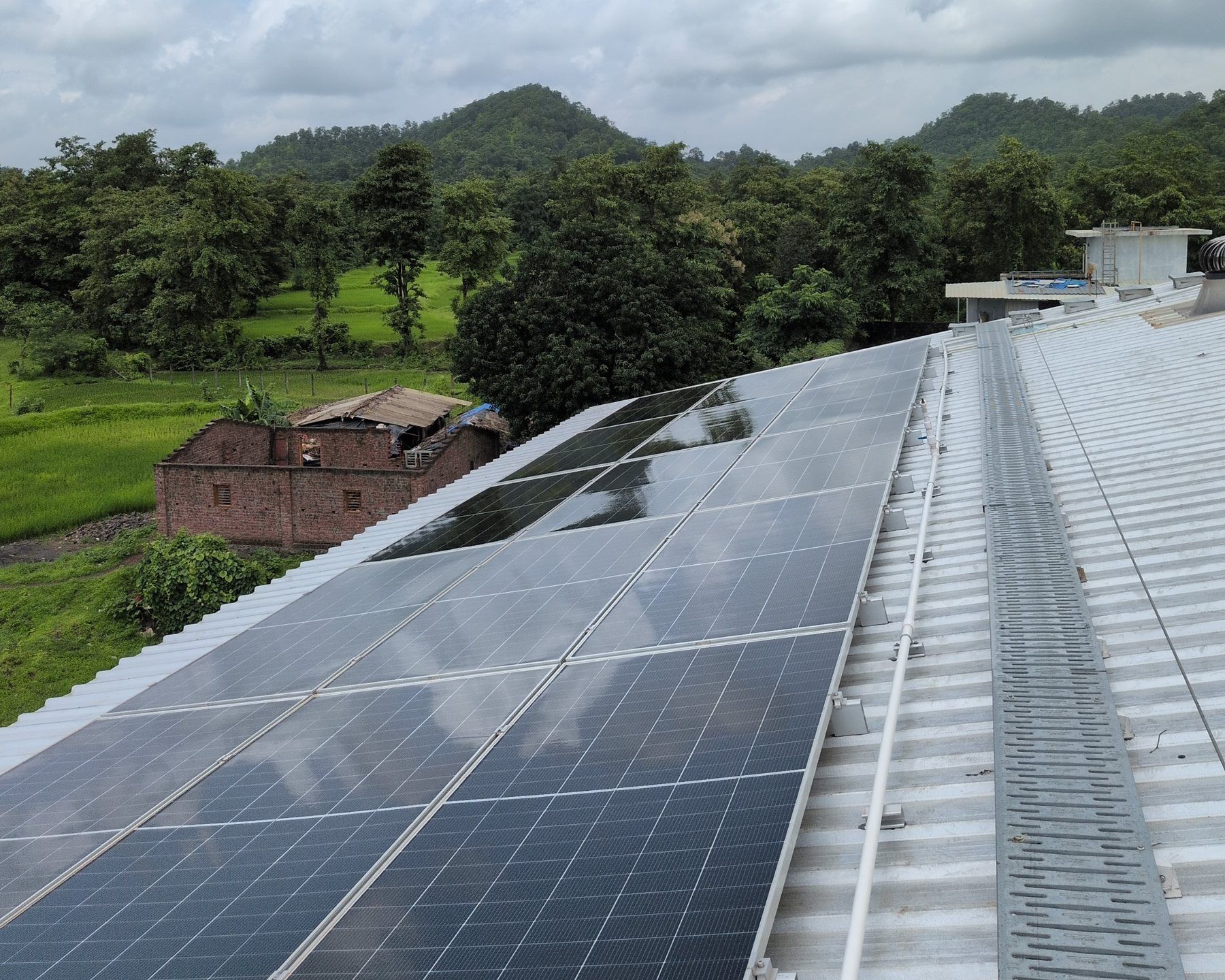
Our agro sites use both metal sheet roofs and ground-mount arrays on spare land. The mix depends on roof condition, how much land is free, and how much generation the site can absorb across the year.
- Mounting on processing and storage sheds designed to comply with OEM installation guidelines
- Ground-mount arrays on unused land within the plant boundary
- Capacity tested against several years of monthly load data
- Inverters and junction boxes kept out of areas where grain or seed dust is present, with cable routes agreed with your safety officer
- Net-metered or behind-the-meter connection chosen for your state
On the project list
Agro and food plants on the list
- Syngenta – AurangabadGround mount · 404 kWp
A ground mount on open land inside the site, the spare-land route.
Plant page - Mahyco – JalnaRCC · 1,119 kWp
Metal sheet roof at Jalna. Mahyco's other plant on the list is at Buldhana, also on metal sheet.
Plant page - DP Cocoa – VaradaiahpalemMetal sheet roof · 759 kWp
DP Cocoa and DP Chocolates each have a plant at Varadaiahpalem in Andhra Pradesh, listed separately.
Plant page - Lemken – NagpurMetal sheet roof · 477 kWp
An agricultural-equipment maker on a metal sheet roof at Nagpur.
Plant page
Finance
Own it, or pay only for the units it generates
Agro and food businesses often earn in seasons. Some prefer to own the plant outright. Others want a per-unit tariff that charges only for the power the plant generates.
CAPEX: you own the plant
Own the plant and claim the lifetime savings. Our CAPEX projects return 25%+ IRR. A Pune plant returned 50%+ IRR and paid back in under 2 years. The study models it for your seasonal load.
How CAPEX worksPPA / OPEX: you buy the units
Adhvanik owns and maintains the plant. You pay an agreed tariff, below your grid rate, only for the units it generates.
How a PPA worksCommon questions
Seasons, cold rooms and dust
Answers for seed, crop-science and food plants, where seasons and cold chains shape the load.
Speak with an industrial solar engineerOur plant is busy for only part of the year. Is solar still worth it?
Often, yes, but the size has to be right. We size the plant against your monthly consumption over several years, then model how your state treats surplus units. If the numbers do not work, the study will say so.
What happens to the solar units in our quiet months?
The plant keeps generating while the building draws less. Your state's metering and banking rules decide whether surplus units are credited, carried forward or paid at a low rate. That is why we size against the quiet months, and why the study shows the surplus month by month.
Can solar run our cold rooms?
During daylight a grid-connected plant supplies cold rooms and chillers together with the grid, and those loads peak when solar output is highest. It shuts down when the grid fails, so backup still needs your existing arrangements or battery storage, which we can assess in the same study.
Is it safe to put a solar plant above a grain or seed store?
Seed and grain dust can ignite in the right conditions, so inverters, junction boxes and cable runs stay out of dust areas, and your safety officer reviews the layout. The modules sit on the roof, and the drawing is strict about the electrical equipment around them.
Should we use the roof or open land?
Both can work. Roofs cost nothing in land but need a structural check; ground-mount arrays on spare land inside the boundary suit sites with weak or crowded roofs. Our agro clients use both, and the study checks roof feasibility and the area available on your site.
Does dust from processing affect generation?
Dust lowers output if modules are not cleaned, which is why cleaning frequency is planned into the O&M schedule for each site. Asset Connect tracks performance continuously, so soiling losses show up quickly.
Our sites are far from big cities. Can you service them?
Yes. Our agro and food plants are in places such as Kini Pada, Varadaiahpalem and Jalna, away from the big metros, and our team members are based across many cities. We respond remotely within 1 working day. If the fault cannot be fixed remotely, an engineer attends site within 2 working days.
Projects
Seed, crop-science and food sites
Seed processing, crop science, agricultural-equipment and food plants. City and state only.
Ozpure – Maharashtra
Maharashtra
Commissioned Jul 2026
- 759 kWp
DP Cocoa – Varadaiahpalem
Andhra Pradesh
Commissioned May 2026
- 490 kWp
DP Chocolates – Varadaiahpalem
Andhra Pradesh
Commissioned May 2026
- 1,119 kWp
Mahyco – Jalna
Maharashtra
Commissioned Jan 2026
- 621 kWp
Mahyco – Buldhana
Maharashtra
Commissioned Apr 2025
- 477 kWp
Lemken – Nagpur
Maharashtra
Commissioned Jul 2022
- 404 kWp
Syngenta – Aurangabad
Maharashtra
Commissioned Jun 2022
Guides and glossary
Surplus, banking and choosing roof or land
- Metal sheet, RCC, ground mount or carport: choosing the installationRead the guide
- Behind-the-meter or net metering: which suits your site?Read the guide
Terms used on this page
Free feasibility study
Size solar to your crop calendar
Share 12 months of bills if you have them. An engineer replies within 48 hours. The study is free and takes 7 days.
What the study covers
- Roof feasibility and the area available for installation
- Policy check for your state and connection
- Financial ROI sheet based on a preliminary design