
Roof type and age
Metal sheet, PEB and RCC roofs can all carry a plant. A sheet near the end of its life should be replaced before panels go on, because lifting a plant later costs more than doing the roof first.
Warehouses & cold storage
A cold store runs compressors day and night and often has too little roof for its load. A dry warehouse has acres of roof and a light load. We size the plant and pick the contract for the building you run.
Load shape
Solar saves money only while the building is using the power. The two types differ most at night.
Schematic, not measured at any site.
Compressors and fans run day and night, so the plant has a load to feed for every hour of sun. The limit is roof area: a compact multi-chamber store can have a small roof next to its power use.
Schematic, not measured at any site.
A dry warehouse mostly runs lights and handling equipment in working hours. With a large roof and a small load, a full-roof plant can out-produce the building at midday. What happens to that surplus (a smaller plant, a second consumer or export where your state allows it) is the design question.
Schedule and seasons
A potato store and an ice-cream store both count as cold storage. Their loads have little in common.
| Seasonal produce stores | Potato, onion and apple stores fill within weeks of harvest, hold through the summer and empty by the next season. Compressor load peaks while the chambers fill and in the summer heat; for months they stand empty or part-full. |
|---|---|
| Frozen food, dairy and pharma cold chain | Chambers stay loaded all year. Compressors cycle around the clock and defrost cycles repeat through the day, so the load is close to flat and peaks a little in the afternoon heat. |
| Dry warehouse and logistics hub | One or two shifts, six days a week, busiest ahead of festival and sale seasons. Load is lighting, dock equipment, conveyors and forklift battery charging, with little at night. |
| What limits the design | Cold-chain uptime, fire load and insurance, roof loading, and who pays the power bill in a leased building. |
| Realistic solar role | A daytime share of the load, often capped by roof area at a cold store and by the load at a dry warehouse. The grid and your generator remain the backup. |
The roof
We look at these before a layout is drawn.
Metal sheet, PEB and RCC roofs can all carry a plant. A sheet near the end of its life should be replaced before panels go on, because lifting a plant later costs more than doing the roof first.
Many cold stores are clad in insulated sandwich panels on purlins. The purlins carry the plant, not the panel, so an engineer should confirm them before layout starts. Multi-storey cold stores are usually RCC.
Condensers, ventilators, tanks and neighbouring sheds all throw shadows. Where they fall decides where modules can sit and what the plant will produce.
Mandatory walkways and safety lines. Warehouse roofs often have skylights, and a plant adds people walking across them every cleaning cycle.
Designed for the wind speed under IS 875, as applicable. Big, open roofs see higher uplift at the edges, so layout and fixings should be checked for wind at each site.
A warehouse full of packaged stock is a high fire load, and insulated panels can burn if their core is not fire-rated. Ask your insurer early what they require for a rooftop plant. Cable routes, DC isolation points and fire-crew access belong on the drawing.
Which model
In a factory the roof owner and the bill payer are the same company. In a warehouse or cold store they often are not, and that decides the contract.
| Your situation | Who pays the power bill | Model that usually fits | Why |
|---|---|---|---|
| You own the building and run the cold store or warehouse | You | CAPEX or PPA / OPEX | CAPEX gives the highest lifetime savings if you have the capital and the tax position. A PPA needs no capital outlay and you pay per unit. |
| You run the business on a tight cash cycle | You | PPA / OPEX | Adhvanik invests, owns and runs the plant; you pay per unit. Nothing is spent up front, and the tariff is set below your grid rate. |
| You are a developer or landlord and tenants pay their own bills | Each tenant | PPA / OPEX, shed by shed | The roof owner and the bill payer are different people, so the contract has to connect them. Connecting the plant to the tenant under the roof is the simplest route. |
| You are a logistics operator on a leased building | You | PPA / OPEX, with landlord consent | A plant lasts longer than most leases. The PPA term has to match your lease, or the landlord has to stand behind it. |
| A multi-tenant building on one common meter | Landlord, recovered through charges | CAPEX by the landlord, or PPA | One meter keeps the structure simple. How tenants are charged for the power is a matter for the lease. |
Evidence
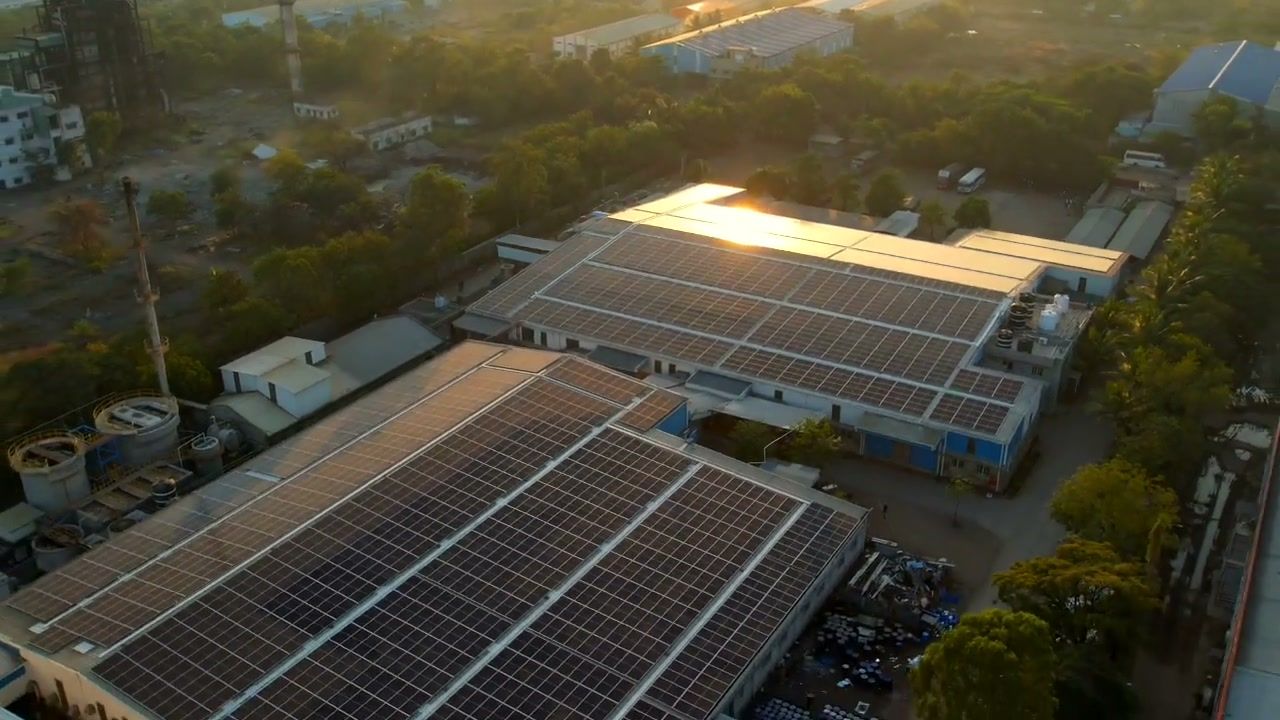
NDR Warehouses (NDR Warehousing) is a reference client for our warehouse rooftop plants. None of these warehouse-site plants is a cold store, so they say nothing about refrigeration load.
Fit check
Answer these and you will know most of what a feasibility study will tell you.
If yesMost of what the plant makes is used on site, which is where the saving is. Cold stores usually say yes; dry warehouses depend on shifts.
If noThe plant may out-produce the load at midday. Then export rules in your state, or a smaller plant, decide the design.
If yesWe can design for the full usable area and size the plant to your load.
If noUsable area falls, and so does the share of your power that solar can cover. Replacing a tired roof first is often worth it.
If yesYou can sign any model without a third party’s consent.
If noGet the landlord’s consent in writing before we spend time on design.
If yesCAPEX or PPA both work, and the longer horizon helps.
If noPay-back inside the lease is the test. If it does not fit, a PPA with a landlord guarantee may, or solar may not be worth doing at this site.
If yesWe can model the saving from your bills.
If noTenants pay the bill and the landlord owns the roof. Who buys the power is the first thing to settle.
Straight talk
Four limits we raise before any quote.
A multi-chamber cold store can use far more power than its roof can make. Solar still cuts the bill but covers a slice of the load. For the rest, look at open access.
A store that fills only in one season draws less power when it is empty. Size the plant against the loaded season’s daytime load.
If you could be gone before the plant has paid for itself, CAPEX is hard to justify. Talk to us about a PPA the landlord supports, or leave it.
Some older sheds cannot carry the load without strengthening. Have a structural engineer check the roof early; we can refer one.
How it works
Tell us your town and average monthly bill, who owns the roof and how long your lease runs. That is enough to start.
The study covers financial ROI sheet based on a preliminary design, policy check for your state and connection, roof feasibility and the area available for installation, and budgetary quote.
We deliver the plant, typically in 90–100 days, against the layout agreed in the study.
Our in-house O&M team monitors the plant and sends a monthly engineer-signed report.
Guides and glossary
Terms used on this page
Common questions
Not on its own. Panels generate in daylight, so a rooftop plant supplies part of the load by day and your grid connection and existing backup cover the rest. Battery storage can help with peak and demand charges, but it is a separate decision.
No. Grid-connected inverters switch off when the grid fails, as safety requires, so your generator and existing backup carry the chambers during an outage, as they do today. If your store runs on diesel for long hours, raise it in the feasibility study, because running solar beside a generator needs extra controls.
Against the loaded season and the months either side, using your bills for at least a year. The study shows what happens to surplus units in every month before it settles the size.
It depends on the state. Some state regulators allow group or virtual net metering so several consumers share a plant, but eligibility is often limited to defined consumer categories. The simplest structure is usually a plant connected to the tenant under each roof. We check your state’s rules in the feasibility study.
Adhvanik invests, owns and runs the plant; you pay per unit. Our PPAs run 5 to 25 years, and some run to 2040 and 2051. Because a PPA can run longer than a lease, the term has to be matched to yours.
Our warehouse plants include the Blink Infra warehouses in Uttar Pradesh and Uttarakhand and the Hindustan Unilever warehouse plants shown above, each with its own page. Tell us about your site and we will suggest the closest reference.
Free feasibility study
The feasibility study is free, takes 7 days and carries no commitment. An engineer replies within 48 hours.
What the study covers