
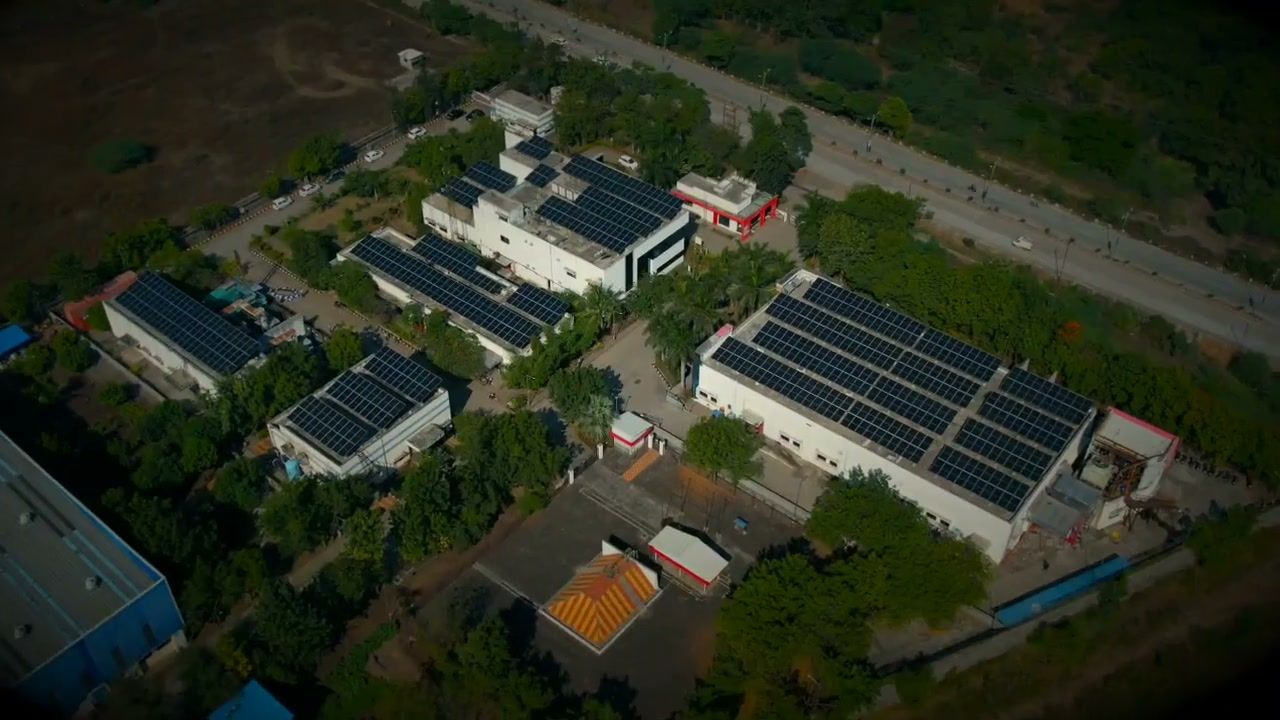
Plant for the park’s own loads
Street lighting, water pumping, treatment plants and the estate office sit on the developer’s own bill. A CAPEX plant on a common building cuts that bill, and the developer owns the asset.
Industrial parks & developers
The park owner holds the roofs and the tenants pay the power bills. A plant works when the contract connects the two. We structure it, build it and run it.
Where solar sits
A park can use more than one of these, and the first shed usually tells you which.
Street lighting, water pumping, treatment plants and the estate office sit on the developer’s own bill. A CAPEX plant on a common building cuts that bill, and the developer owns the asset.
Adhvanik invests, owns and runs the plant; you pay per unit. Connected to the company that occupies the shed, it replaces some of that tenant’s grid power. The developer and the tenant agree what the roof use is worth.
Some tenants use more power than any roof can make. For them, open access or group captive brings in solar generated elsewhere and wheeled to the plant.
How a park runs
The facts that shape a programme.
| Tenant schedules | A one-shift assembler, a three-shift moulder and a warehouse tenant can sit in the same park. There is no single park load shape, so each shed is studied on its own tenant's bill. |
|---|---|
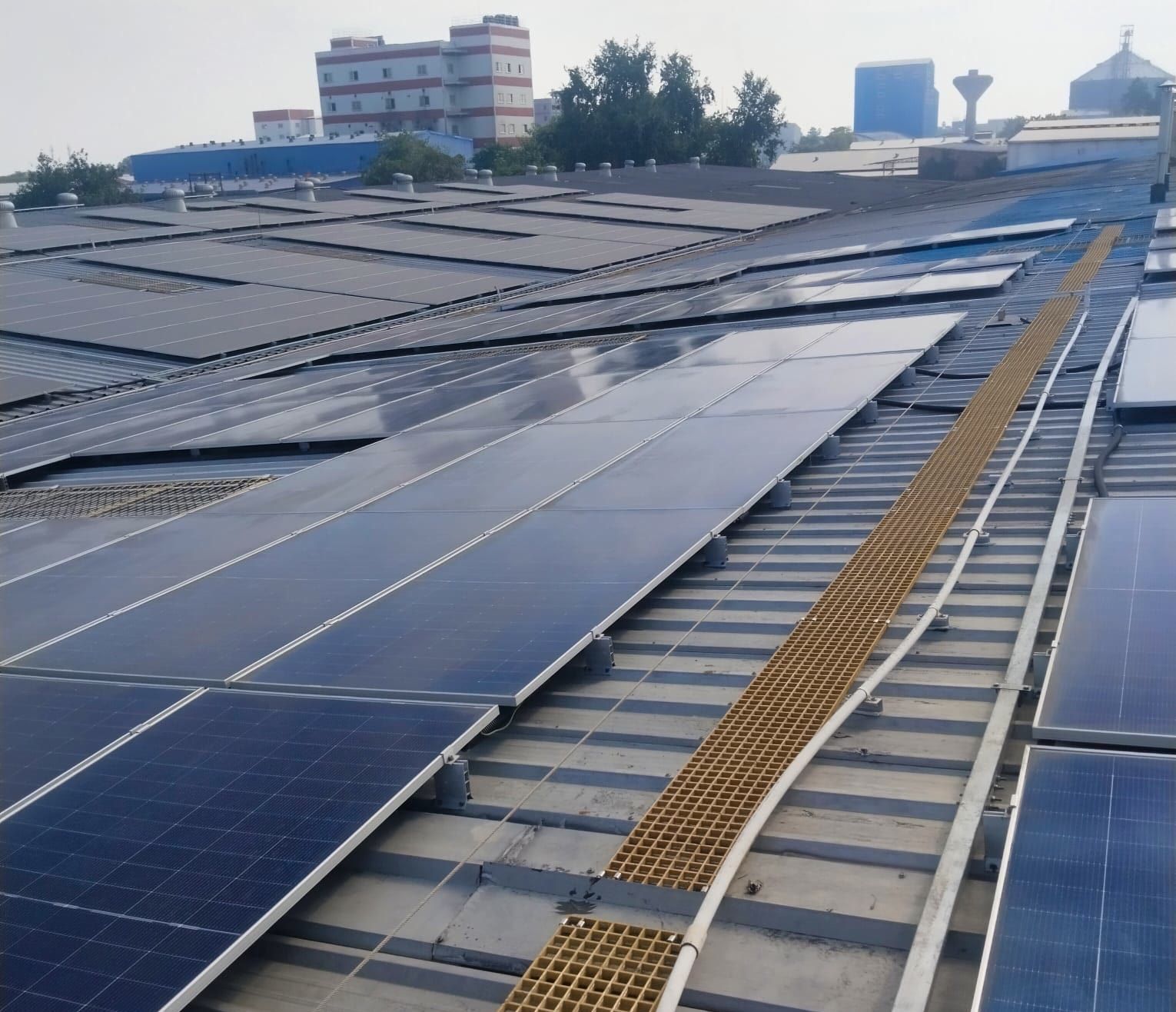
| Roofs | Pre-engineered steel sheds with metal sheet roofs, often built to the developer's standard design, and RCC blocks in multi-storey or flatted factories. A repeated design makes repeated plant design possible. |
| Common-area load | Street lighting, water pumping, a common effluent or sewage treatment plant, the estate office and shared utilities. Modest, steady and billed to the developer. |
| Who buys the power | Most tenants hold their own connection from the DISCOM. Some parks hold one bulk connection with sub-meters, and some developers hold a distribution licence. The rules differ by state, so this is the first thing we check. |
Tenant questions
A tenant signs only when these five are answered in plain words. Write the answers into the contract.
Which model
The same shed can be built three ways. The first question is whose bill the plant reduces.
| Your situation | Who pays the power bill | Model that usually fits | Why |
|---|---|---|---|
| The developer pays for common-area power | Developer | CAPEX by the developer | The saving lands on the developer’s own bill, so the developer owns the plant and keeps the return. |
| The developer owns the sheds and tenants pay their own bills | Each tenant | PPA / OPEX, shed by shed | No tenant spends capital, and each plant is connected to the tenant under it. The developer provides the roof. |
| The developer wants solar as part of the park’s offer | Each tenant | A PPA programme with one template | One contract and one design standard across sheds is easier to sign and to run than a one-off per tenant. |
| A tenant with a very large load | Tenant | Open access or group captive | Roofs in a park are rarely big enough for its largest users, so off-site solar covers the rest. |
| Plots sold outright, so each owner holds a roof | Each owner | CAPEX or PPA, as for any factory | The developer is no longer in the contract. Each owner decides for their own building. |
Programme
Start with one or two sheds whose roofs and tenants are ready. Review them with us and agree one template contract.
Each roof gets its own study covering financial ROI sheet based on a preliminary design, policy check for your state and connection, and roof feasibility and the area available for installation.
One design standard across the park, run on Adhvanik Central: standard design, procurement, BOQ and milestone control.
Asset Connect shows every plant in the park in one place: generation, PR, irradiance, alerts, monthly engineer-signed reports.
Evidence
Each is a single owner or tenant, not a park programme. They show we build in the industrial towns where parks and estates sit.
Tamil Nadu
Commissioned Oct 2026
Gujarat
Commissioned Aug 2026
Madhya Pradesh
Commissioned Jun 2026
Madhya Pradesh
Commissioned Feb 2026
Himachal Pradesh
Commissioned Jan 2026
Himachal Pradesh
Commissioned Jan 2026
Straight talk
Each one is easier to settle before the first plant than after the fifth.
A plant outlives most leases. Without a clear term for what happens when a tenant leaves, the contract becomes the developer’s problem.
Where plots were sold shed by shed, there is no single landlord to sign for the park. Each owner has to be approached separately.
Some estates require the estate authority’s or association’s consent for structures on a plot. Check your allotment terms before design starts.
Not every shed is worth building on. The feasibility study decides which are, and a programme should start with the sheds that clearly are.
Guides and glossary
Terms used on this page
It depends on the state. Some state regulators allow group or virtual net metering so several consumers share a plant, but eligibility is often limited to defined consumer categories. The simplest route is a plant on each shed, connected to the tenant under it. We check your state’s rules in the feasibility study.
Not under a PPA. Adhvanik invests, owns and runs the plant; the tenant under it pays per unit. The developer gives roof access and supports the contract.
That has to be written into the contract at the start. Our PPAs run 5 to 25 years, and some run to 2040 and 2051. That is longer than most leases, so the contract should say whether the next occupant takes the plant over, or the developer does.
Our in-house O&M team looks after them, with a 95% uptime guarantee plus a performance-ratio guarantee. Generation is visible on Asset Connect.
With a pilot shed. One plant on one roof sets the design, the metering and the reporting, and the next sheds follow the same pattern. Our warehouse work for Blink Infra runs across several sites in the same way.
Free feasibility study
Tell us the park’s town and a shed’s average monthly bill. The full study takes 7 days and is free.
What the study covers