
Solutions
Industrial solar solutions for Indian factories
Six ways to bring solar into a factory, from the roof you already have to a solar park in another district. Adhvanik Energy designs, finances and builds the plant, and our own engineers maintain it afterwards.
- industrial rooftop solar commissioned
- 110 MWp
- factories under active maintenance
- 170+
- states
- 17
Two routes
Behind your meter or over the grid
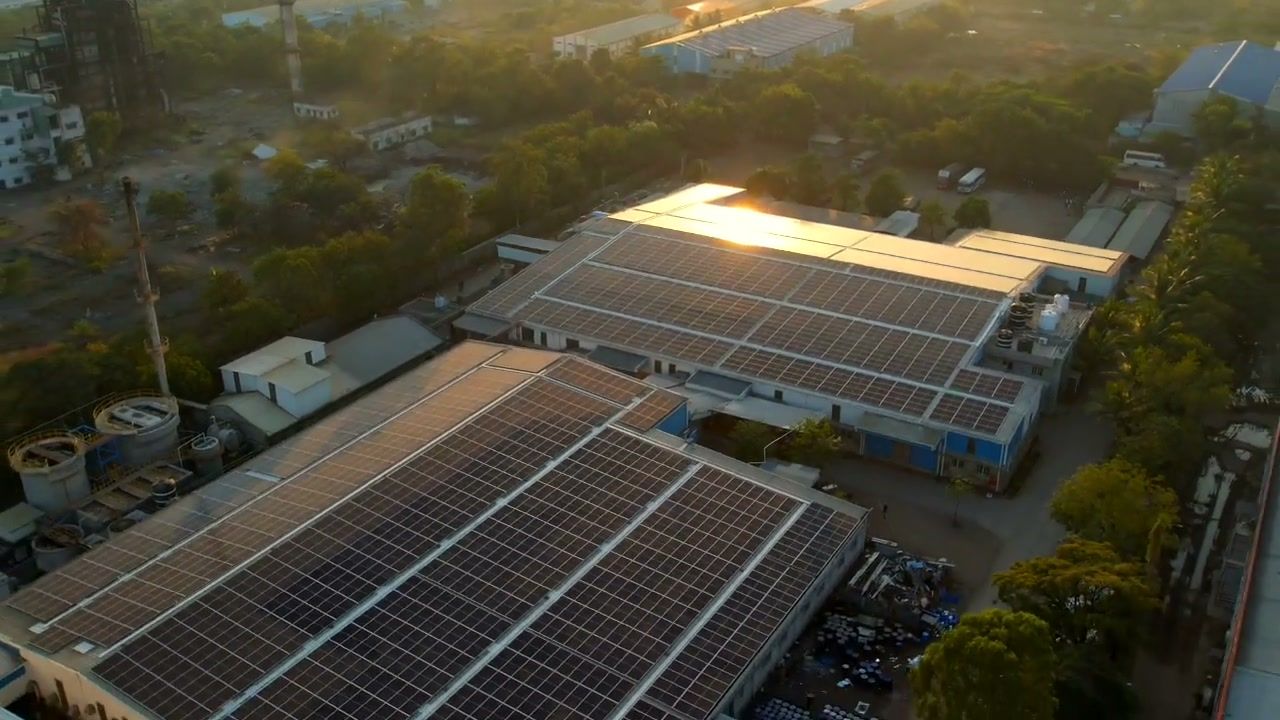
Power made inside your boundary is used behind the meter, with no wheeling or transmission charges and no surcharges. Power made elsewhere travels over the grid, and those charges apply.
On site · behind the meter
Use the roofs, land and parking you already have
- Metal sheet roofsThrough-fixed or non-penetrating mounting, chosen for your roof and designed to comply with OEM installation guidelines
- RCC roofsBallasted or anchored structures
- Ground mountUses unused land inside the boundary
- Solar carportsShade and generation, EV-charging ready
- Battery storageNewPeak shaving and demand-charge reduction
Off site · over the grid
Bring in solar from a park elsewhere
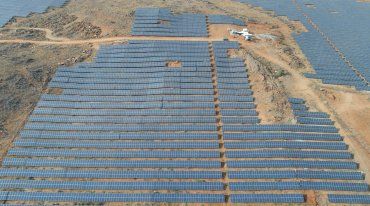
For loads larger than your roof can serve. Transmission and wheeling charges, surcharges and banking terms decide whether it beats your DISCOM tariff.
Where to start
Start from what your site has
Find the line that sounds like your factory. A site can match more than one.
- Large sheds with metal sheet roofs in sound conditionMetal sheet rooftop Usually the lowest cost per kWp, because the structure is already there. The checks are sheet condition and wind; a structural engineer confirms the purlins can take the load.
- Flat concrete roofs on production blocks, stores or officesRCC rooftop Ballasted or anchored to suit the slab. The checks are how much extra weight the slab can take and the state of the waterproofing.
- Roofs that are full or weak, and free land inside the fenceGround mount Still behind your meter. The checks are shade, cable run and the boundary.
- Open parking, and EV fleet or staff charging on the planSolar carport Shade and power from the same steel; chargers can follow later. The checks are vehicle clear height and the parking layout.
- Demand far larger than everything on site can supplyOpen access The checks are the charges, the state rules and the contract.
- High demand charges, a sharp evening peak or frequent short outagesBattery storage Lowers the peak your meter records and bridges short interruptions. The check is whether your tariff makes it pay.
Around the plant
How you pay for it, and who looks after it afterwards
Rooftop, ground-mount and carport plants share the same four ways to pay and the same in-house maintenance team.
Clients
Factories we build for or maintain












Projects
The latest plants on our project list
Capacities are DC unless marked AC.
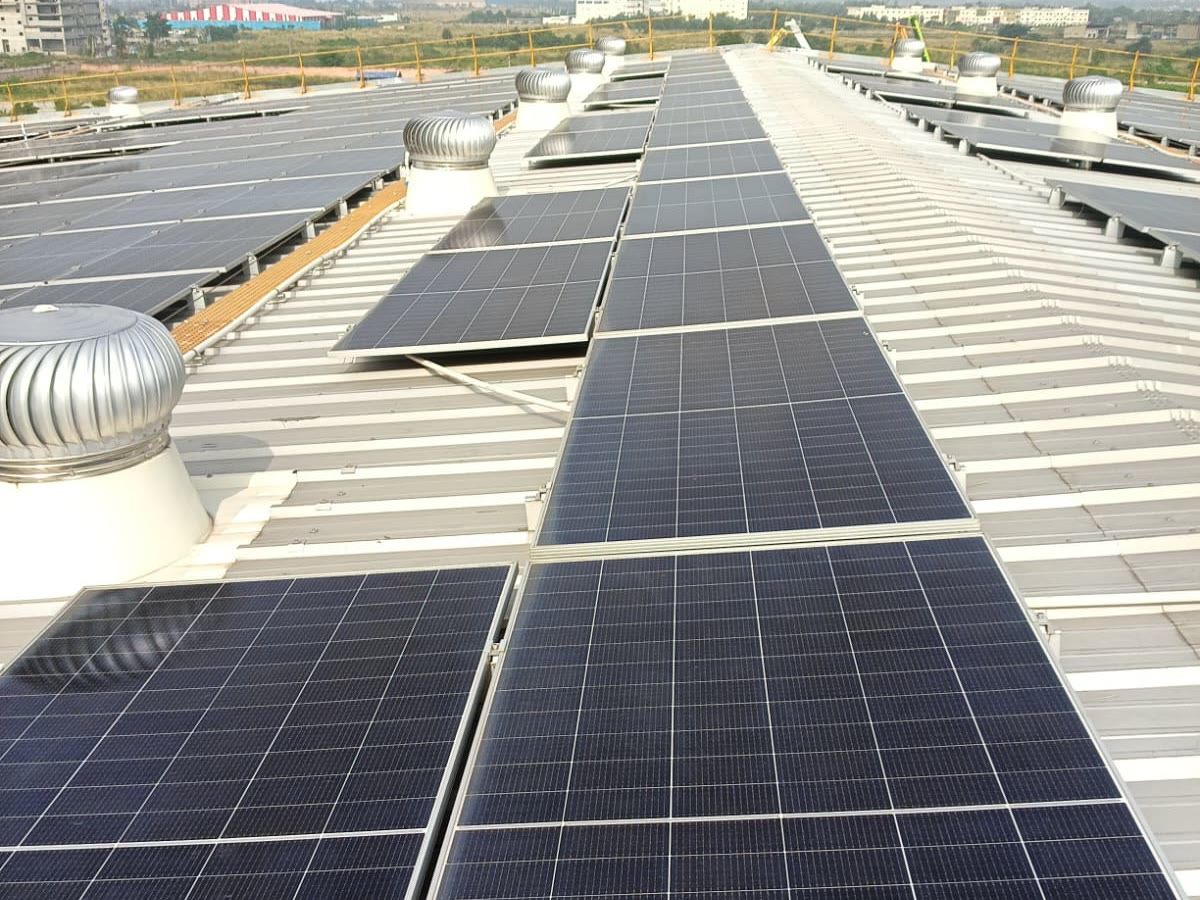
MYK Laticrete – Durgapur
West Bengal
Commissioned Oct 2026
- 531 kWp
FUSO Glass – Sriperumbudur
Tamil Nadu
Commissioned Oct 2026
- 450 kWp
MYK Laticrete – Vadodara
Gujarat
Commissioned Sep 2026
- 1,009 kWp
Exotic Fruits – Krishnagiri
Tamil Nadu
Commissioned Aug 2026
- 519 kWp
Zeeta Electrical – Sanand
Gujarat
Commissioned Aug 2026
- 332 kWp
HUL – Haridwar, 332 kWp
Uttarakhand
Commissioned Jul 2026
Common questions
Choosing, combining and paying for a solution
Where to start, combining types, timelines and maintenance.
Speak with an industrial solar engineerWhich solution is right for our factory?
Start with what you already have: roofs first, then free land inside the boundary, then parking. Open access covers demand that everything on site cannot, and a battery helps when demand charges or evening peaks drive your bill.
Can we combine more than one type on the same site?
Yes, and many larger factories do. Metal sheet and RCC roofs, ground mount and carports can all feed the same network behind one meter and, where your state allows, open access can top them up. They are designed together so the total matches your daytime load.
How do we pay for it?
Four ways: CAPEX, PPA / OPEX (RESCO), Financial lease, EMI. With CAPEX you invest in and own the plant. With a PPA, Adhvanik invests in and owns it, and you pay for the electricity it generates, so there is no upfront investment. The feasibility study gives you an ROI sheet and a budgetary quote for your site.
How long does a project take?
The feasibility study takes 7 days. After that, typical plant delivery is 90–100 days. Multi-site programmes are scheduled plant by plant.
Who maintains the plant after it is built?
Our in-house O&M team, which maintains 170+ factories today. Plants are monitored on Asset Connect. Contracts carry a 95% uptime guarantee plus a performance-ratio guarantee. Lost generation is credited at ₹3.00/kWh. Maintenance contracts are available for up to 25 years.
Guides and glossary
Guides on installation type, CAPEX versus OPEX and metering
- Metal sheet, RCC, ground mount or carport: choosing the installationRead the guide
- CAPEX or PPA: which solar model fits your factory?Read the guide
- Behind-the-meter or net metering: which suits your site?Read the guide
Terms used on this page
Free feasibility study
Ask an engineer to rank the options for your site
The feasibility study is free, takes 7 days and carries no commitment. An engineer replies within 48 hours.
What the study covers
- Financial ROI sheet based on a preliminary design
- Policy check for your state and connection
- Roof feasibility and the area available for installation