Industries

Industrial rooftop solar for each manufacturing sector

A moulding line that runs 24 hours and an assembly unit on a general shift need differently sized plants. Each sector below is described by its shifts, roofs, load and limits, with the plants we have built in it.

industrial rooftop solar commissioned
110 MWp
industrial clients
50+
factories under active maintenance
170+
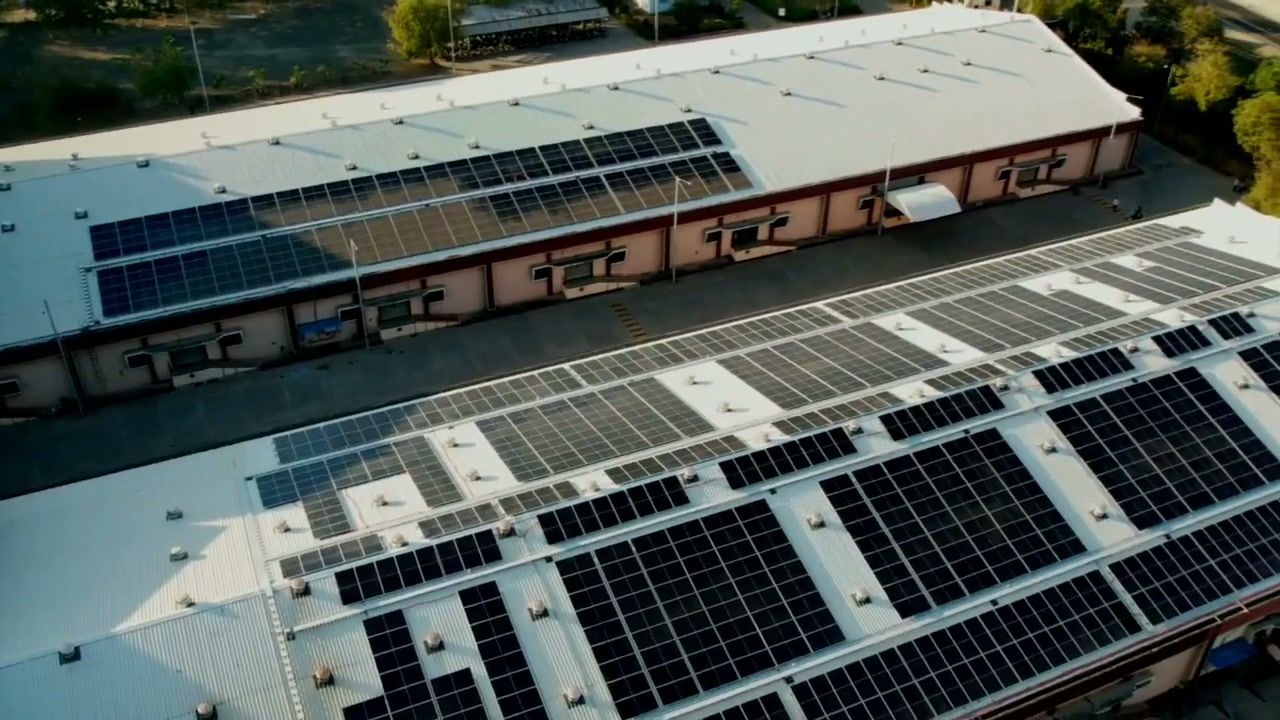
Aerial view of solar modules across factory shed roofs

Who we build for

Factories first, then warehouses, logistics parks and commercial buildings

  1. 01

    Our core focus

    Factories and manufacturing plants

  2. 02

    Our second focus

    Warehouses, cold storage, logistics parks, and real-estate developers who lease sheds

    On our list: Blink Infra warehouses in Uttar Pradesh and Uttarakhand, NDR Warehousing, and Hindustan Unilever warehouse plants.

  3. 03

    Also

    Hotels, offices and commercial buildings

Not covered: Homes / housing societies and small shops.

Sectors

The manufacturing sectors we build for most

Side by side

How the sectors differ on shifts, roofs and limits

General patterns across Indian plants, not figures for any client.

SectorShifts and seasonsCommon roofsWhat shapes the design
FMCGTwo or three shifts; peaks before summer and festivalsSheet halls, RCC utility blocks, warehouse roofsHygiene rules for contractors; process heat stays on gas or steam
Plastics and polymersThree shifts, seven daysSheet sheds, RCC storesA 24-hour load, fine dust, combustible stock
Electrical and electronicsA general shift or two, with a weekly offRCC terraces, some sheet roofs, parking for carportsSurplus on the weekly off; power quality
AutomotiveTwo or three shifts; OEM shutdown weeksLong sheet roofs on steel framesMaximum demand, old sheets, oil mist
Agro and food processingSeed: a few months a year. Food: all yearSheet sheds and spare landQuiet-season surplus, grain and seed dust
Packaging and printingTwo or three shifts; extruders often continuousSheet halls with exhaust outletsSolvent zones, film and paper stock
Glass and ceramicsTwo or three shifts; furnaces cycled by batchLarge sheet-roof hallsFurnace heat, a load no roof can cover
ChemicalsBatch or continuous; many plants run 24 hoursRCC process blocks, sheet storesHazardous-area zoning, corrosive air, permits for roof access
PharmaceuticalsTwo or three shifts, with HVAC that never stopsRCC production blocks, sheet warehousesCleanroom HVAC base load, change control, GMP audits
Steel and metalsContinuous or three shiftsVery large sheet roofs, plus landFurnace load far above any roof; heat and dust
TextilesSpinning around the clock; weaving and processing in shiftsLarge sheet or RCC roofs; sawtooth roofs in older millsHumidification load, lint dust, roof geometry

More sectors

Chemicals, pharma, steel and textiles

The engineering questions are the same as in the sectors above. What changes is the zoning, the audits and the size of the load.

Chemicals

Many chemical plants keep reactors and utilities running around the clock, so the night base load is high and solar covers a slice of it. The constraint that matters most is zoning: areas with flammable vapour or dust are classified, and inverters, junction boxes and cable runs stay outside them. Corrosive air decides the materials, roof access is by permit, and the layout is agreed with your safety team.

On our project list: Pidilite – Kala Amb, 312 kWp, Radiant Indus Chem – Aurangabad, MDB Chemicals – Jalgaon

Pharmaceuticals

A pharma plant holds its cleanrooms at set temperature, humidity and pressure, so the air handling runs day and night: a high base load with a daytime peak on top. Roof work often runs under change control, so the installation team, the method statement and any work near cleanroom ceilings are documented in advance. A grid-connected plant adds a supply source and leaves the validated process systems as they are.

On our project list: Akome Life Care – Haridwar, FDC – Baddi

Steel and metals

A furnace or mill can use more power than any roof on the site could generate, so solar takes a block off the bill and does not change the cost of melting. Roofs are very large, but heat, dust and crane movement shape the layout. Spare land and open access are the routes to more generation, and a plant should be sized to the daytime base load and not the furnace peak.

On our project list: ArcelorMittal Nippon Steel – Bahadurgarh, ArcelorMittal Nippon Steel – Pune

Textiles

Spinning mills run around the clock, while weaving, knitting and processing work in shifts, and humidification adds a daytime load. Older mills have sawtooth roofs whose glazing and orientation need review before any layout. Lint is a fire load, so cable routes and electrical equipment stay clear of it. Pearl Global Industries, a well-known textile and apparel maker, has five plants with us. Raymond, also a textile client, has placed an order with us for what will be the fourth-largest rooftop solar plant on an industrial shed in India.

On our project list: Pearl Global – Bengaluru, Pearl Global – Chennai, Pearl Global – Gurugram, 384 kWp

Why sector matters

What decides the size and type of plant

Two factories with the same monthly bill can need very different plants. We settle these four before drawing anything.

When the plant runs

A three-shift moulding plant, a general-shift assembly unit and a seasonal seed plant use the same kilowatt-hour very differently. We size to your hourly and monthly load, so what the plant generates is used on site.

What the roof is made of

Metal sheet, RCC, a mix of both, or spare land inside the boundary. Each needs a different structure, and the wrong one can cost you a roof warranty or a waterproofing layer.

What solar cannot replace

Solar makes electricity. Gas, steam and thermal oil for process heat, and diesel for backup, stay as they are. In heat-heavy sectors the study measures the electrical share of your energy bill first.

How you want to pay

Some groups want to own the asset and its returns. Others want a fixed per-unit tariff and no capital outlay. We offer CAPEX, PPA, lease and EMI.

Clients

Clients we can name

Some of the 50+ industrial clients we work with. Names shown with permission.

  • Britannia Industries
  • Hindustan Unilever
  • Mitsubishi Electric
  • Dabur
  • Marico
  • Legrand
  • Atomberg
  • Mahyco
  • Syngenta
  • Pearl Global
  • LANXESS
  • Horiba
  • Samruddhi Industries
  • Jindal Poly Films
  • ArcelorMittal Nippon Steel
  • Honeywell
  • Campa Cola
  • Cadbury
  • Raymond
  • Sterlite
  • FUSO Glass
  • Baramati Agro
  • NDR Warehousing
  • Mrs. Food Rite
  • Balmer Lawrie
  • FDC
  • Pidilite
  • Zed Black
  • Patwari Bakers

Track record

Company figures across all sectors

industrial rooftop solar commissioned
110MWp
factories under active maintenance
170+
of our clients have given us another project
85%
states
17

Common questions

Does your sector or site fit?

Who we work with, and where.

Speak with an industrial solar engineer
Do you work with manufacturers outside these sectors?

Yes. These pages cover the sectors where we have the most plants. We also work with chemicals, personal care, pharma, textile, steel & metals and warehousing sites, and the engineering approach is the same: check the roof, read the bills, and size the plant to the load.

Which sites get the most out of industrial rooftop solar?

Solar pays best where the daytime load is high and steady: typically a bill above ₹3 lakh a month and a sanctioned load of 300 kW or more. Smaller sites can still benefit, and the feasibility study says whether yours is worth doing.

We have factories in several states. Can you cover all of them?

We have built and maintain plants across 17 states. 170+ factories are under our active maintenance. Each plant is designed for its own state rules and monitored on one platform.

Free feasibility study

Model solar for your factory

Share your site and monthly bill. An engineer replies within 48 hours.

What the study covers

  • Financial ROI sheet based on a preliminary design
  • Policy check for your state and connection
  • Roof feasibility and the area available for installation
Call us+91 22 4618 3484Get a free feasibility study