The challenge
Solar whose value does not depend on net-metering rules
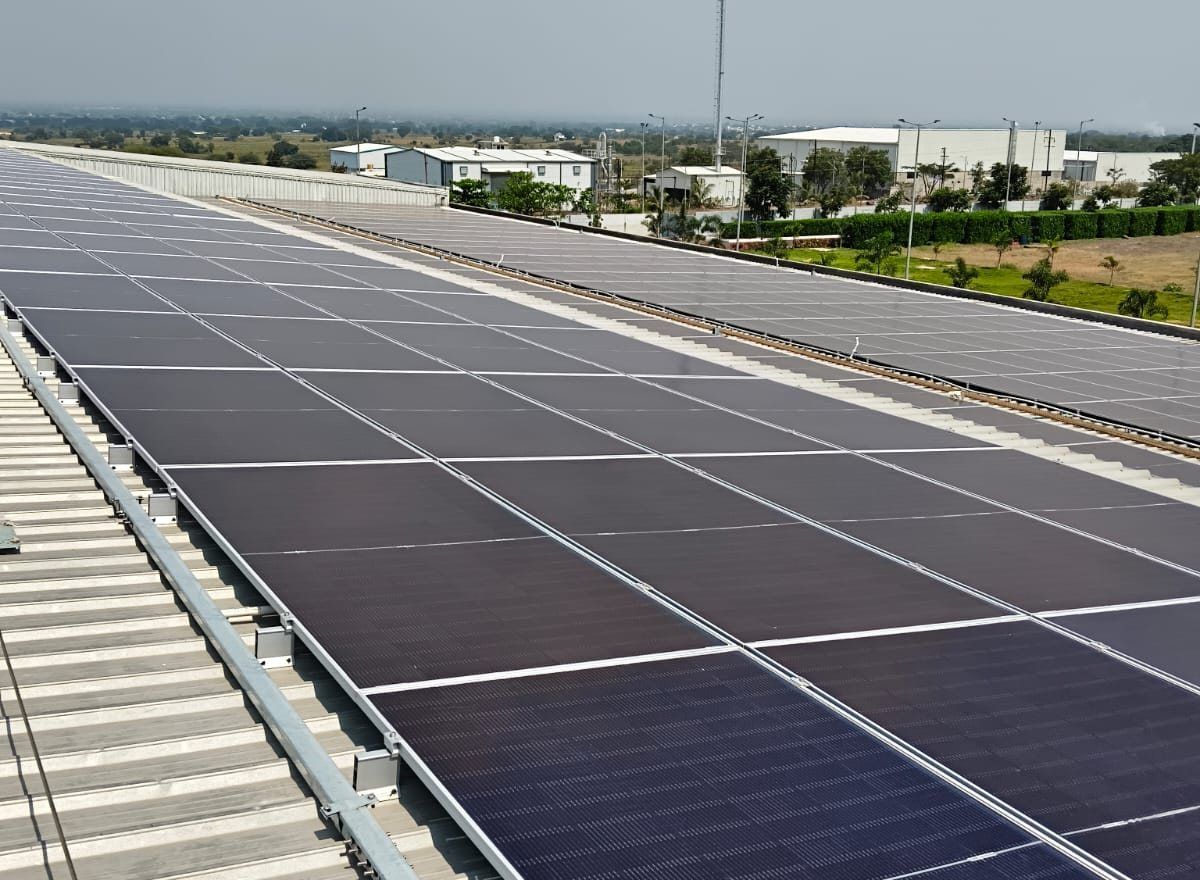
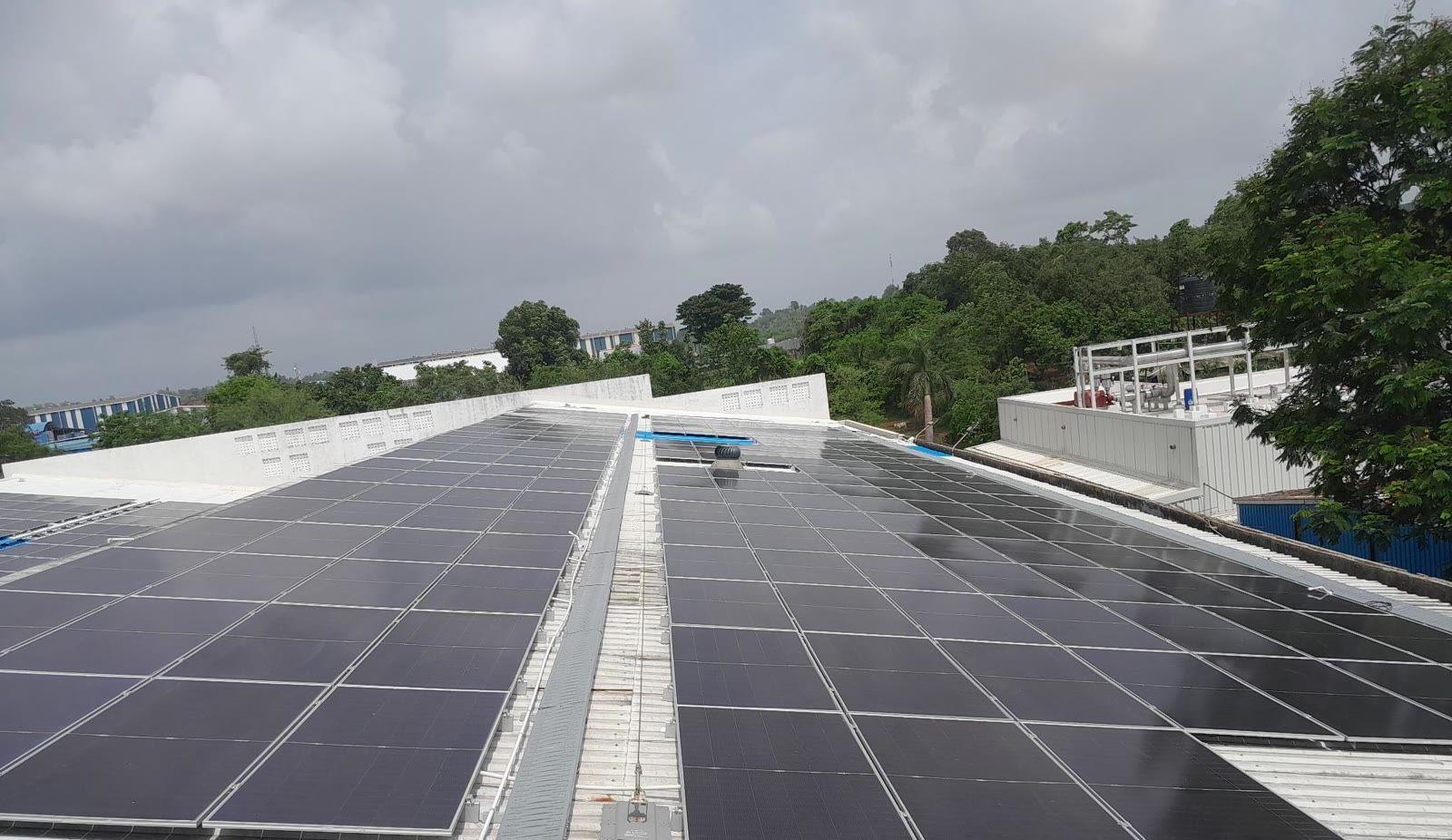
Haridwar is Hindustan Unilever’s biggest factory in India, with a large load. Net metering would have capped the plant at 1 MW and limited the benefit. HUL had vacant land and roof space for up to 4 MW, and a daytime load large enough to use that output, so Adhvanik connected the plant behind the meter.
Net metering lets a factory bank surplus solar with the DISCOM and draw it back later. Each state regulator sets those terms, and they change: credit rates, capacity caps and banking charges have all moved in recent years. A plant that relies on exporting a large share of its output carries that policy risk for its whole life.
Ground mount fits when a site’s daytime demand is larger than its usable roof area, or when the roofs cannot take the weight of modules and structure. Land inside the boundary that is doing nothing else can become generating capacity.
The solution
How the plant was engineered
Sized to the daytime demand
The plant was sized against the site’s daytime demand, so the factory uses the generation itself. A unit consumed on site replaces a unit bought from the grid at the full industrial tariff, which is the most a solar unit can be worth.
Connected behind the meter
The plant feeds the factory’s own network before the utility meter. Its economics rest on the tariff the factory already pays and not on export credits, so a tightening of net-metering rules leaves its value largely untouched.
Laid out around a working campus
A ground-mount plant inside an operating site has to respect internal roads, drainage and fire access. The layout is planned around them, with clear access for cleaning and inspection.
Built in phases
Adhvanik built the capacity in several phases. For part of it, the team moved a solar plant from another HUL factory to Haridwar.
Implementation
How it was delivered
Adhvanik designed, procured, built and commissioned the Haridwar ground-mount plant and handed it over to Hindustan Unilever.
Hindustan Unilever also has plants with us at Nalagarh in Himachal Pradesh.
After handover, the owner can place the plant under our O&M contract, which can run up to 25 years.
Finance model
The client owns the plant (CAPEX)
Hindustan Unilever chose CAPEX, so it owns the plant from day one and keeps the full saving. Ownership suits a manufacturer with the capital and a long horizon at the site. Of the four models we offer, CAPEX gives the highest lifetime savings.
HUL maintains the Haridwar plant itself.
Results
Hindustan Unilever plants on our published list
| Plant | Location | Roof / configuration | Finance model | Capacity | Commissioned |
|---|---|---|---|---|---|
| HUL – Haridwar, 1,126 kWp | Haridwar, Uttarakhand | Metal sheet roof | CAPEX | 1,126 kWp | To be confirmed |
| HUL – Haridwar, 801 kWp | Haridwar, Uttarakhand | Ground mount | CAPEX | 801 kWp | To be confirmed |
| HUL – Haridwar, 800 kWp | Haridwar, Uttarakhand | Ground mount | CAPEX | 800 kWp | To be confirmed |
| HUL – Haridwar, 685 kWp | Haridwar, Uttarakhand | Ground mount | CAPEX | 685 kWp | To be confirmed |
| HUL – Haridwar, 436 kWp | Haridwar, Uttarakhand | Ground mount | CAPEX | 436 kWp | To be confirmed |
| HUL – Haridwar, 64 kWp | Haridwar, Uttarakhand | Ground mount | CAPEX | 64 kWp | To be confirmed |
| HUL – Haridwar, 332 kWp | Haridwar, Uttarakhand | Metal sheet roof | CAPEX | 332 kWp | Jul 2026 |
| HUL – Rajpura | Rajpura, Punjab | Metal sheet roof | CAPEX | 210 kWp | Jul 2026 |
| HUL – Orai | Orai, Uttar Pradesh | Ground mount | CAPEX | 1,131 kWp | Apr 2022 |
| HUL – Kandla | Kandla, Gujarat | RCC | CAPEX | 160 kWp | Nov 2023 |
What happened next
More HUL sites, and a focus on Scope 2
Based on performance, HUL has given Adhvanik projects across multiple sites, including Orai, Kandla, Nalagarh and Rajpura. HUL is now focused on reducing its Scope 2 emissions by adding solar at its warehouses and other parts of its supply chain.
Does this match your site?
This approach fits if
- Your daytime load is larger than your usable roof area
- You have open land inside the plant boundary
- You want returns that don’t depend on export credits or banking rules
- You prefer to own the plant outright
Related pages