
What changed in 2026
On 18 March 2026 the Government of Maharashtra approved the Maharashtra Renewable Energy and Energy Storage Policy 2025-26 to 2035-36 by Government Resolution. For rooftop projects above 100 kW seeking connectivity from 1 April 2026, or another date the state notifies, the policy makes storage mandatory: at first, at least 50% of the solar capacity for 2 hours. The level is to be reviewed every two years and applies to new projects. Existing rooftop plants, under any arrangement, are allowed and encouraged to add storage.5
On 25 March 2026 MERC issued its order in Case No. 75 of 2025 (post-remand). MSEDCL told the Commission that rooftop capacity in the state had reached 5,178.81 MW, past the 5,000 MW level the rooftop regulations set for a Grid Support Charge. The order sets that charge and applies it to all net-metering consumers, existing and new, except installations up to 10 kW. It is levied on units generated. For FY 2026-27 it is ₹1.42 per unit for HT consumers and ₹1.96 per unit for LT consumers. Once it is levied, the banking charges that stood in its place no longer apply.6
The same order revised time-of-day slots. Energy banked during solar hours (9 am to 5 pm) can be drawn only in the same solar-hour slot, so a factory’s night-time use is not offset by daytime exports.6
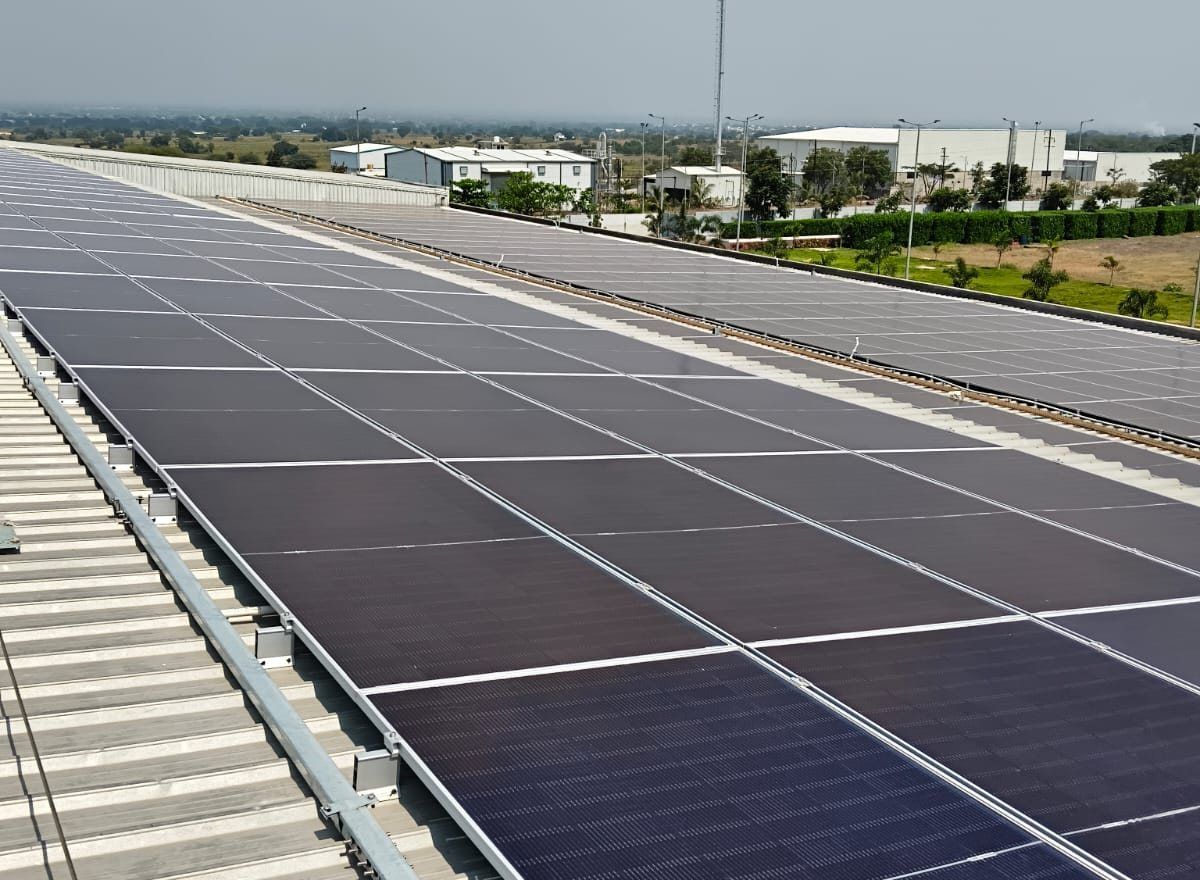
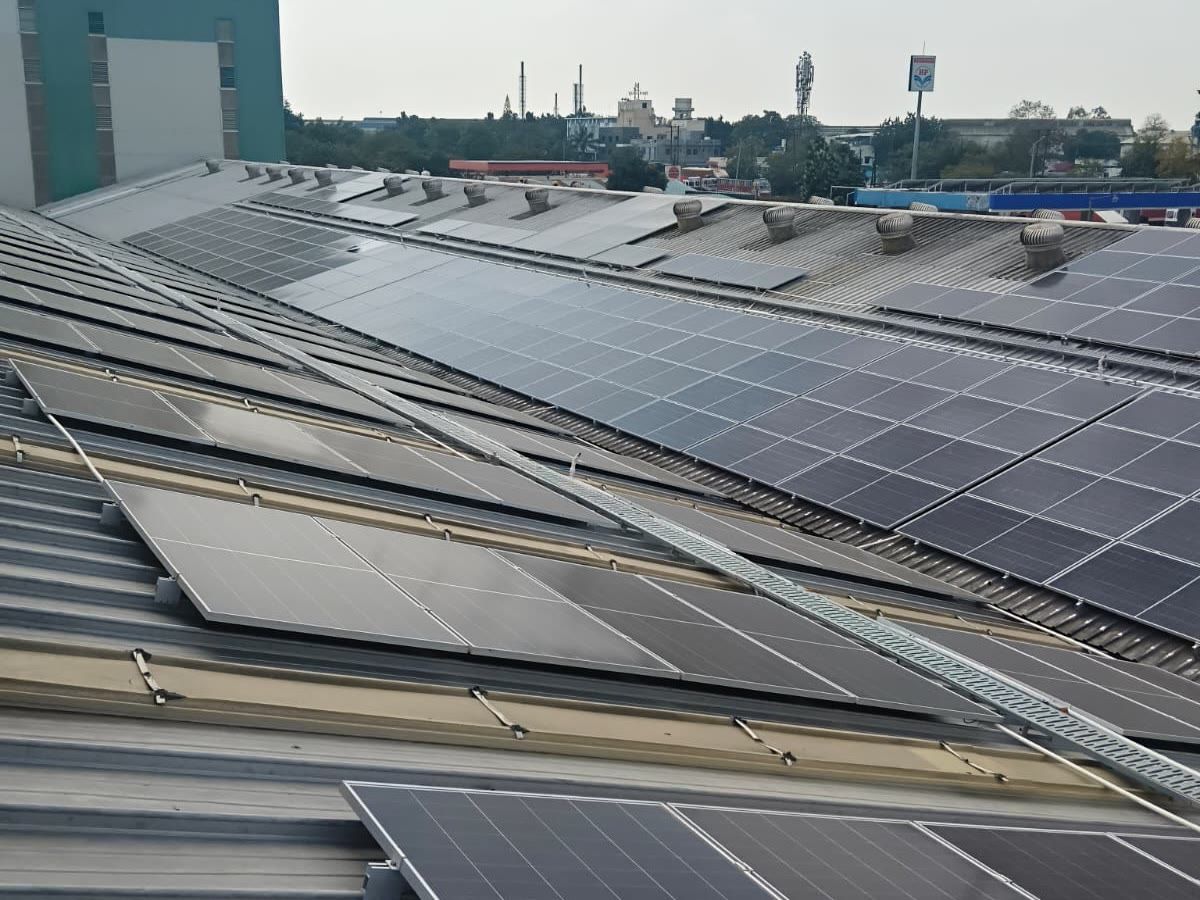
Rooftop solar: five ways to connect
The state’s rooftop rules are the MERC (Grid Interactive Rooftop Renewable Energy Generating Systems) Regulations, 2019, as amended. The 2023 amendment raised the net-metering ceiling from 1 MW to the lower of 5 MW and the consumer’s contract demand or sanctioned load.14 Where a contract demand has been approved, the sanctioned load is not used; sanctioned load applies only when no contract demand is approved separately.1
| Arrangement | What it means for a factory |
|---|---|
| Net metering | Exports offset what you draw from the grid, and unused credit carries forward under the settlement rules. A Grid Support Charge applies on generation above 10 kW from 2026.16 |
| Net billing | The distribution company buys your surplus at a pre-determined generic tariff set by the Commission, and bills what you draw at the approved retail tariff for your category.1 |
| Group net metering | Surplus from one plant is adjusted across more than one connection of the same consumer in the same licensee area. The regulations exempted wheeling charges and losses only until state rooftop capacity reached 5,000 MW, a level MSEDCL reported as crossed in February 2026.16 |
| Gross metering | The regulations give it its own energy accounting and settlement, separate from your consumption.1 |
| Behind the meter | The plant feeds your internal network and you opt for none of the above. The Commission treats these installations as outside net metering, net billing and gross metering, but wants some oversight of them.1 |
There is also a payout rule that matters for plants sized above daytime demand. If net-metering credit keeps rising for three consecutive financial years, half of it is paid to the consumer electronically within two months after the third year ends, and the other half is credited to the second bill after that year-end. Late payment carries interest.1
Open access, and running it alongside rooftop
MERC’s Distribution Open Access (Second Amendment) Regulations, 2023 aligned the state with the central green energy open access rules. A consumer with a contract demand or sanctioned load of 100 kW or more, or an entity whose connections add up to 100 kW or more within the same electricity circle, can take green energy open access. Captive consumers have no minimum load and no cap on supply, and the Commission clarified that captive users include group captive consumers formed through a special purpose vehicle or similar entity under the applicable Rules.2
The 2026 state policy extends the storage requirement to open access projects above 100 kW.5
The 2023 amendment also added Regulation 3.4: a consumer with a rooftop system can use open access at the same time. It covers net metering, net billing, gross metering and behind-the-meter plants. While both run, the net drawal recorded at the meter, adjusted for banking credit under the rooftop rules, is what gets set against open-access energy credits.2
Open access charges (wheeling, cross-subsidy surcharge, additional surcharge and banking) are set by MERC orders and change. We have not quoted rates here; ask for the current schedule that applies to your licensee.
What sets the size of a plant now
For most factories the binding limit on net metering is contract demand, because the ceiling is the lower of the two. A factory with a small contract demand and a large roof will hit the ceiling long before it runs out of space, and the roof beyond that has to go to a different arrangement: behind the meter, or open access.
Since 2026 two more things weigh on the size. A new plant above 100 kW has to budget for storage, and a net-metered plant pays the Grid Support Charge on what it generates. A plant sized to the factory’s daytime use, running behind the meter, keeps more of its value under these rules than one that leans on exporting to the grid.56
If you are considering open access as well as rooftop, the 2023 rule helps you, but the 2026 case shows the distribution company may not read it your way. Get its position in writing before you design around both.3
Confirm with MSEDCL or your licensee
Questions to put to the distribution company in writing before you finalise the design:
- Whether the storage requirement for plants above 100 kW applies to your application, and from which date.
- Whether the Grid Support Charge will apply to your plant, and at the HT or LT rate.
- Whether your connection is assessed on contract demand or on sanctioned load.
- Which arrangement your application goes under (net metering, net billing, group net metering or behind the meter).
- If you use or plan open access, a written confirmation that net metering continues alongside it under Regulation 3.4.
- Whether MERC has finalised new rooftop regulations since this page was checked.
Sources
Checked 18 Nov 2026. Where a source is trade press, the regulator’s own order or regulation text is the authority; confirm the version in force for your connection.
- MERC: statement of reasons, Grid Interactive Rooftop Renewable Energy Generating Systems (First Amendment) Regulations, 2023 (opens in a new tab)
- MERC: statement of reasons, Distribution Open Access (Second Amendment) Regulations, 2023 (opens in a new tab)
- SolarQuarter: MERC clarifies net metering rights for consumers using open access power (June 2026, Case No. 245 of 2025) (opens in a new tab)
- Mercom: Maharashtra raises net metering cap for rooftop solar projects to 5 MW (Nov 2023) (opens in a new tab)
- Government of Maharashtra: Renewable Energy and Energy Storage Policy 2025-26 to 2035-36, approved by GR dated 18 March 2026 (opens in a new tab)
- MERC: order in Case No. 75 of 2025 (post-remand), 25 March 2026, Grid Support Charges at paras 21.8 to 21.14 (opens in a new tab)