Two weeks back, I took a much needed break to the Himalayas. This time, I decided to go to Pelling, a small Hill Station in West Sikkim. My trip to Pelling started off with a painful bone jarring road journey from Bagdogra Airport to Pelling Town. The road to Pelling initially follows the Teesta and after Melli, follows the Rongeet.
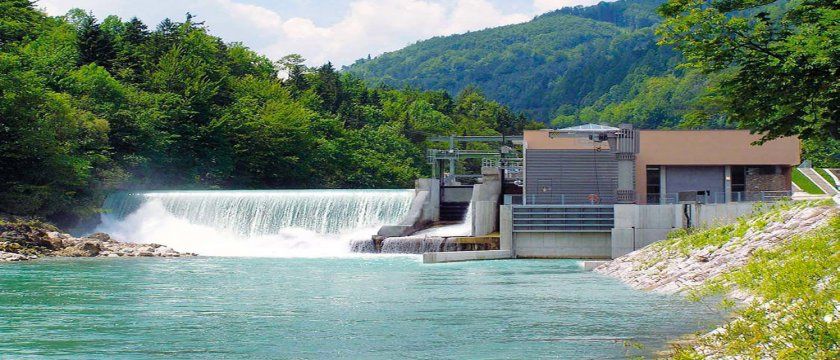
This area has immense hydro potential and is dotted with hydel plants in construction and already constructed. Sikkim has as per list of Central Electric Authority (CEA), 21 live hydropower projects with a total capacity of 4225 MW. A lot of them are plagued with delays. Let us look at the Teesta III 1200MW project. The initial project cost was at ₹5706 Crores set at 2005 prices, then escalated to ₹8,581 Crores at 2012 prices and now at ₹11,383 Crores due to further delays in commissioning. The problem is that with increase in cost, the PE parties find a threat to their investment. The Sikkim Government has already borrowed ₹800 Crores to meet its equity commitment and now with increase in project cost and perceived threat by PE parties to walk out, the government may eventually have to bail out the project. The annual budget of the Sikkim Government is ₹2000 Crores. Many of these projects are run-of-the-river projects which means they generate electricity from the force of river waters and do not need big dams or reservoirs. What it does mean is forcing the flow of water into tunnels so that the water is directed towards running a turbine. Government estimates that once all the projects are completed, the Teesta will be forced underground for 52kms or a third of its total length. Most of these projects were envisaged in the heady days of 2007 – 2008, when average spot power prices were ₹5.5 per unit. Today it is ₹2.4 a unit.
In the hydropower sector, delays are usually caused by multiple factors. They can be divided into two broad types. Technical risks include engineering and commercial problems, while non-technical risks include environmental and social factors, community issues, and health and safety challenges. In a study by the International Hydropower Association, a large portion of delays were attributable to non technical causes particularly Environmental Concerns (16%), Permits (16%) and lack of social acceptance (11%). Traditional Environmental and Social Impact Assessments (ESIAs) are effective at identifying a project’s impact and potential mitigation measures, but often overlook stakeholder expectations and perceptions. Principles of ESIAs are Social Impact Assessment, Risk Assessment Life Cycle Analysis, Energy Analysis , Health Impact Assessment , Regulatory Impact Assessment Species Impact Assessment, Technology Assessment , Economic Assessment, Cumulative Impact Assessment, Strategic Environmental Assessment and Integrated Impact Assessment
Some, like Energy Analysis, focus on a particular part of the environment. Others, like Life Cycle Analysis, enable the consideration of all those parts of the environment that are relevant to the assessment. Also, depending on how the terms, like health, are defined for the study you may find that it is covering most of the issues that would be found in an EIA. For example a Technology Assessment does include a review of the impacts on ecosystems, air quality and the like. Similarly, if the definition of environmental is taken broadly for an EIA, then the EIA may cover the issues of the other assessment processes; for example: Social aspects (such as impacts on employment, community interaction); Risks (such as threats to native animals, water supplies); Life cycle (such as the impacts at each stage of the project design through to operation and closure); and Energy (such as use of non-renewable energy sources, Greenhouse gas emissions), etc
So in theory, a good ESIA should have prevented the situation that is plaguing the Hydro sector today.