The best way to understand how renewable projects work is to compare it to a bond or an annuity. A bond involves an investment of a fixed amount upfront from an investor to a borrower. After the investment, the borrower pays an interest (fixed or variable) at fixed intervals till he returns the principal borrowed.
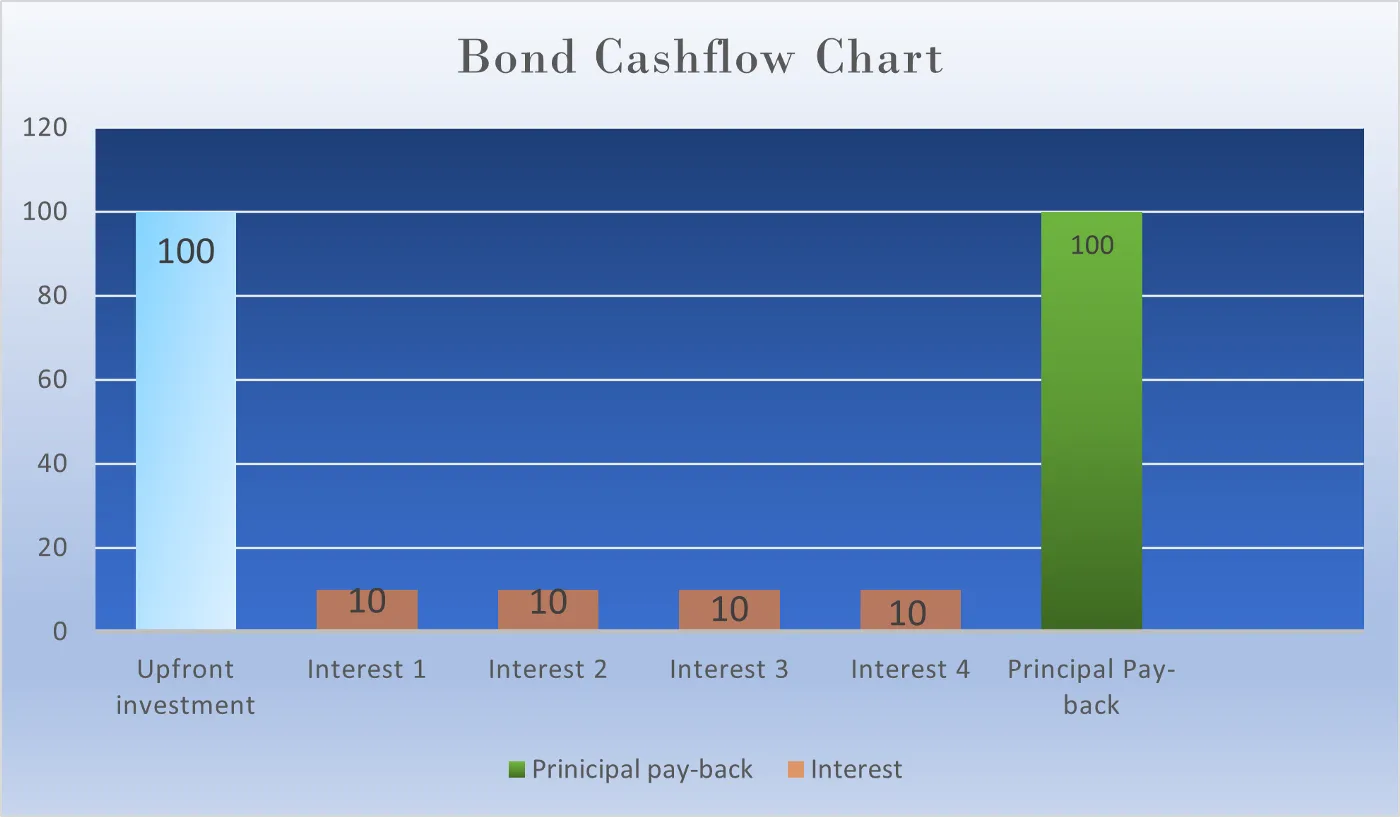
In a similar fashion, renewable projects require an upfront investment to build the project. After the project is built, the power generated is sold to a power trader like DISCOM/Utilities or consumers of power like Industries, Commercial or Residential complexes. The price of the power and the tenure of the agreement is fixed up front and captured in the form of a Power Purchase Agreement (PPA). Every month the project owner bills the consumer for the power and receives the due payment. This continues for the tenure of the agreement after which the project owner can continue to sell power or scrap it based on the plant performance.
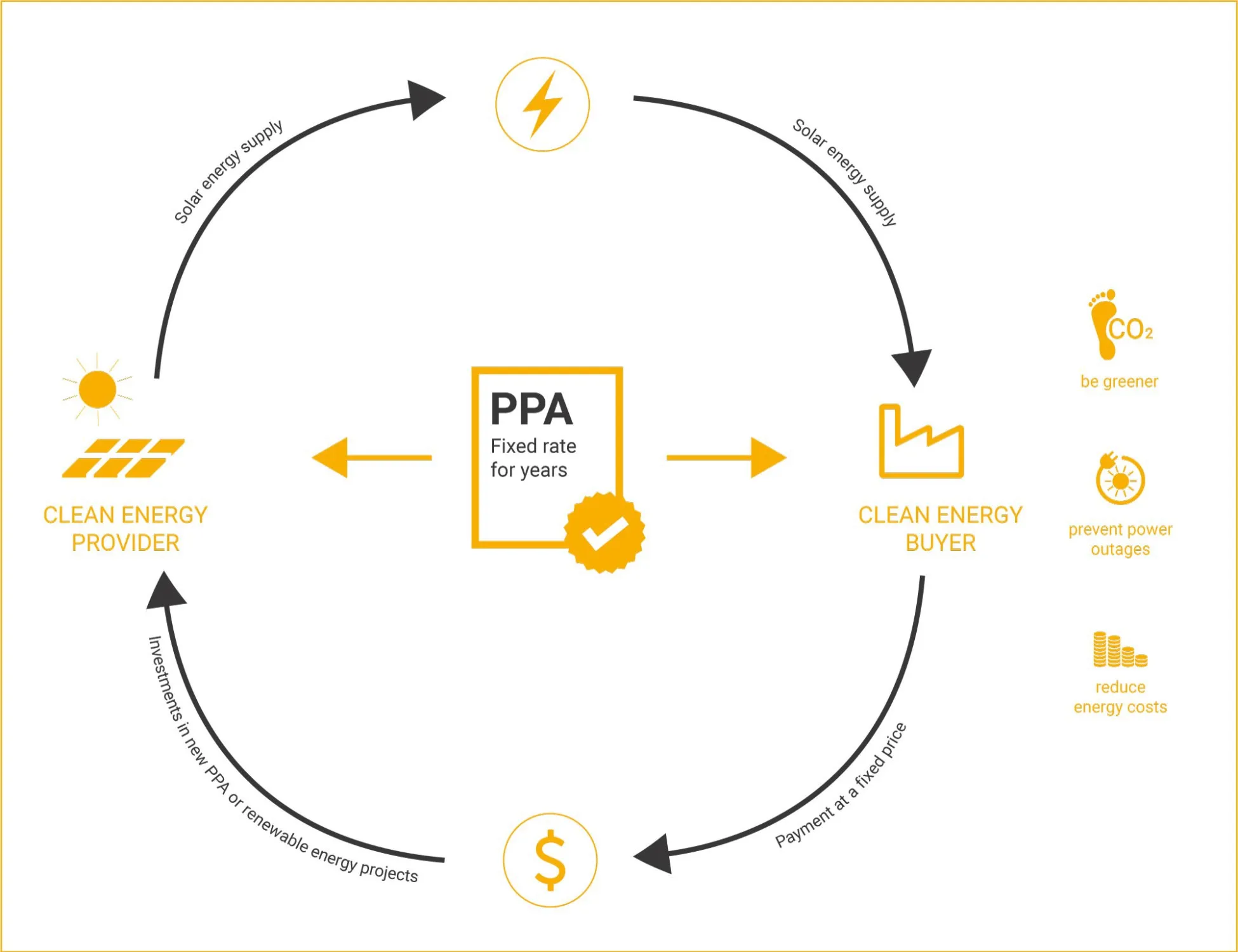
Though conceptually renewable energy projects generate regular cashflows like a bond, they are a tad more complicated and require in-depth understanding. The following sections will delve in some of the dynamics involved when investing in renewable energy projects.
Project Life
Renewable energy projects (Wind, Solar and Hydro) are long term projects that have an average life of 25 years. These projects are backed by machinery warranties and guarantees that ensure the uptime for a minimum of 25 years. In comparison, the majority of bond tenures average 5–10 years and longer bond tenures do not carry higher premiums in interest rates. For example, the current 10 year yield on Government of India bonds are at 6.12% while the 24 year bond carries a yield of 6.76%.
Variability of Annual Cash flows
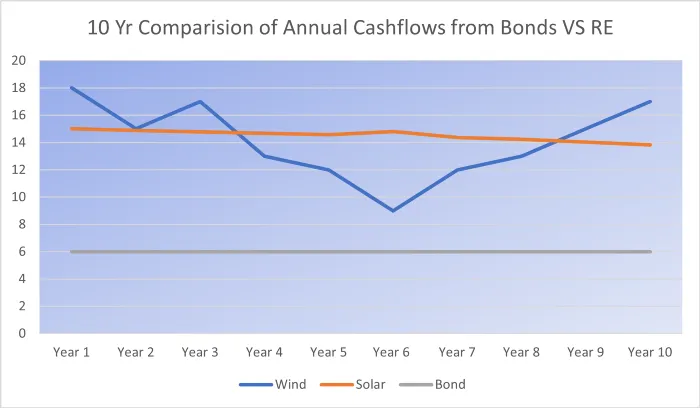
In a bond, the annual cash flow (interest) to be paid to an investor is fixed. Renewable energy projects work differently (See chart below). The generation from renewable projects are nature dependent. Hence, during years of strong winds and monsoons wind turbines generate upto 30–40% more than years of low winds or drought. Whereas solar generates more during clear skies and years of less rainfall. Between the two, the variability in generation from wind turbines can be 40%, while solar projects on rare occasions witness 5–7% annual variability. Understanding this variability and tracking the performance of machinery is critical to ensuring higher returns over the life-time of a project.
Degradation
Solar projects face degradation in performance over its life-time with generation dropping 0.73% on average every year for 25 years. The maximum degradation of a solar module is backed by performance warranties by the manufacturer that puts a cap on degradation losses. While accounting for IRR calculations such degradation is taken into consideration. On the other hand, similar to bonds the performance of wind turbines do not degrade over its life-time provided maintenance is done well.
Running Costs
The primary raw material for solar plants is the sun. For windmills it is the wind, and for hydro plants it is water fed by rainfall or glaciers. All of these natural resources are free, hence the raw material input cost is zero for renewable energy projects. There is some maintenance cost involved which generally varies from ₹0.10 to ₹1.00 per unit generated depending on the choice of technology and age of the machine. Maintenance for Solar is drastically lower than that for Wind. In comparison, the running cost to maintain a bond is minimal and at most includes salaries paid for maintaining the books of accounts.
While these are just some of the aspects involving the economics of running a renewable energy project, there are many more aspects to be considered. I hope that this article has made it easier for the reader to understand the key aspects of how renewable energy projects make money. To recap, they are long term in nature that generate regular cashflows like a bond. The running costs are extremely low but the annual cashflows can vary depending on availability of natural resource running the projects. In comparison to bonds, the returns from renewable projects are more than double and offer almost the same degree of safety.