A strategic alert for Directors and CXOs: How simultaneous policy shifts in India and China create a “Procurement Cliff.”
In our previous analysis, The End of Cheap Solar, we discussed the operational case for industrial rooftop solar. However, the Union Budget 2026–27 has coincided with a major global policy shift to create a critical “Procurement Cliff” for Indian industries.
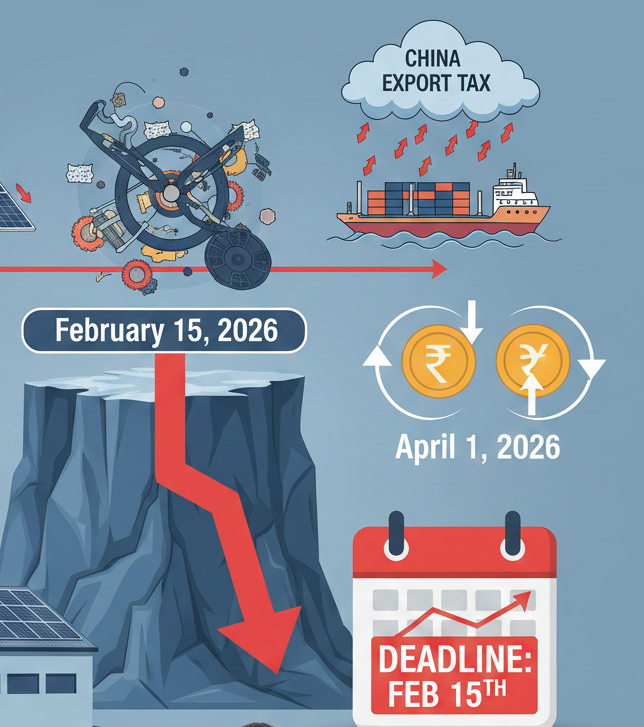
1. The "Double Whammy" on Price (April 1st)
On 1 April 2026, two independent major policy changes will collide, driving up the landed cost of solar hardware for Indian buyers:
- From India (Import Duty): As per the Union Budget 2026, the Basic Customs Duty (BCD) exemptions for silicon used in solar cells and wafers are set to lapse.
- From China (Export Tax): China will remove the VAT Export Rebate for solar PV products (effective April 1).
The Net Result: You face a simultaneous price hike from the seller (China) and the customs officer (India) on the same day.
2. The Logistics Reality: The Hard Deadline is February 15th
- The 40-Day Rule: Shipping and customs clearance take ~40 days.
- The Constraint: Orders must clear customs before April 1.
- The Call to Action: Procurement must be finalized by Feb 15, 2026.
3. From "Daytime Power" to "24/7 Resilience" (BESS)
The Opportunity: BCD exemptions on lithium-ion cell manufacturing equipment lower storage costs. The Strategy: Combine Solar + Storage to arbitrage ToD tariffs and protect uptime.
4. Future-Proofing for Global Compliance (ESG)
- Risk: EU CBAM & global ESG audits will tighten.
- Advantage: Early decarbonization creates a long-term compliance moat.
Strategic action timeline
- Before Feb 15: Finalize solar procurement
- Medium Term: Evaluate BESS integration
- Long Term: Treat solar as ESG risk hedge
Disclaimer: This document is for informational purposes only and based on our analysis of the Union Budget 2026–27 and current market trends. It does not constitute legal, tax, or financial advice. Policies and duties are subject to change. the company accepts no liability for actions taken based on this content.